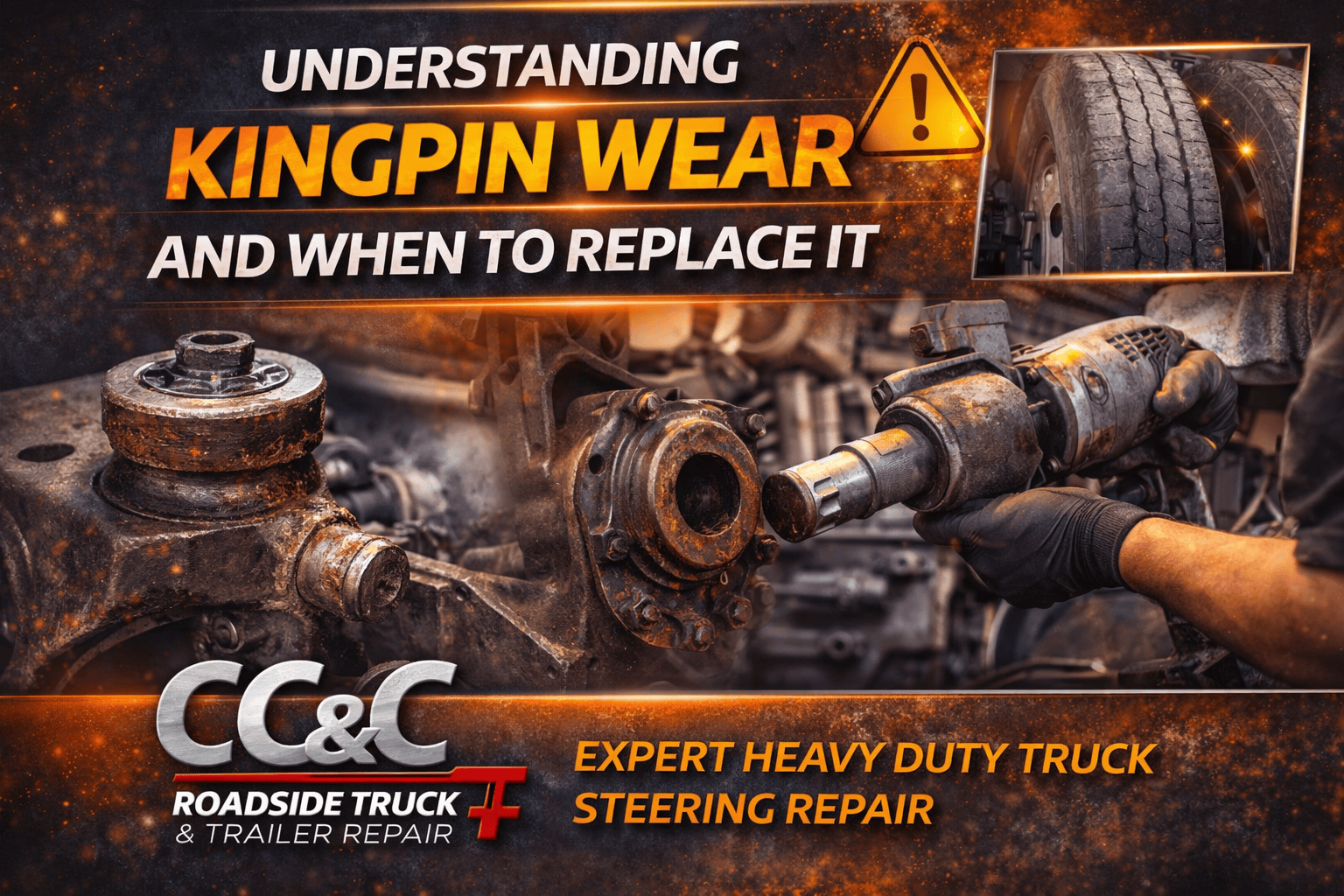
Truck Kingpin Wear and Knowing When to Replace It. In the world of heavy-duty trucking, steering components take a tremendous amount of stress every mile a truck travels. One critical component that often goes unnoticed until problems arise is the kingpin. The kingpin connects the steering knuckle to the axle and allows the wheels to pivot when the driver turns the steering wheel.

Truck Kingpin Wear and Knowing When to Replace It
When kingpins begin to wear out, steering becomes less precise, tire wear increases, and overall vehicle safety can be compromised. Understanding the signs of kingpin wear—and knowing when replacement is necessary—can help drivers and fleet managers prevent bigger problems down the road.
What Is a Kingpin?
The kingpin is a hardened steel pin that connects the steering knuckle to the front axle assembly. It allows the wheel hub and steering components to rotate smoothly while supporting the heavy weight of the truck.
Because kingpins carry so much load, they rely on bushings and lubrication to reduce friction and maintain proper movement. Over time, constant stress from steering, braking, and road conditions causes wear on these components.
Common Causes of Kingpin Wear
Several factors contribute to premature kingpin wear in semi-trucks, including:
-
High mileage and heavy loads
-
Insufficient lubrication
-
Poor road conditions or potholes
-
Worn bushings or bearings
-
Improper maintenance schedules
Trucks that operate in harsh environments or carry heavy loads frequently tend to experience faster kingpin wear.
Warning Signs of Worn Kingpins
Kingpin wear usually develops gradually, which is why it’s important to recognize the early warning signs.
Drivers and technicians should watch for:
-
Loose or wandering steering
-
Uneven or rapid front tire wear
-
Clunking noises from the front axle
-
Excessive play in the steering wheel
-
Vehicle pulling to one side
These symptoms often indicate excessive movement between the kingpin and its bushings.
How Kingpin Wear Affects Your Truck
Ignoring worn kingpins can lead to several serious issues.
First, worn kingpins affect steering control, making it harder to keep the truck aligned and stable on the road. This can increase driver fatigue and reduce safety.
Second, worn kingpins cause uneven tire wear, which shortens tire life and increases operating costs.
Finally, excessive wear can eventually lead to steering component failure, which could result in unsafe driving conditions or roadside breakdowns.
When Should Kingpins Be Replaced?
Kingpins should be replaced when movement exceeds manufacturer specifications. During inspections, technicians measure vertical and horizontal movement in the steering knuckle. If excessive play is detected, replacement is recommended.
Typical situations that require kingpin replacement include:
-
Failed DOT inspections
-
Severe front-end looseness
-
Noticeable tire wear patterns
-
Steering instability
Replacing kingpins early prevents more extensive suspension and steering repairs later.
Why Kingpin Replacement Requires Specialized Equipment
Kingpin replacement is not a simple repair. It requires heavy-duty tools and precise installation to ensure proper alignment and fit.
The process typically includes:
-
Removing the steering knuckle assembly
-
Pressing out worn kingpins and bushings
-
Installing new components with proper alignment
-
Lubricating and testing steering movement
Proper installation is critical to ensure smooth steering and long component life.
Professional Kingpin Repair You Can Trust
When steering components wear out, professional repair is essential for both safety and performance. CC&C Roadside Truck & Trailer Repair in Madisonville, Tennessee provides experienced heavy-duty truck repair services for drivers and fleets in Madisonville, Tennessee and surrounding areas.
Their technicians understand the demands placed on commercial trucks and work to diagnose suspension and steering problems quickly, helping keep trucks safe and road-ready.
Keep Your Steering System in Top Shape
Kingpins may be small components compared to the size of a semi-truck, but they play a huge role in steering control and overall vehicle stability. Regular inspections, proper lubrication, and timely replacement help prevent costly repairs and keep trucks operating safely.
By staying ahead of kingpin wear, drivers can protect their equipment, improve handling, and avoid unexpected downtime on the road.
Truck Kingpin Wear and Knowing When to Replace It
CC&C Roadside Truck & Trailer Repair – Keeping You Moving
423-442-3601
After Hours Emergency Line
423-404-3633