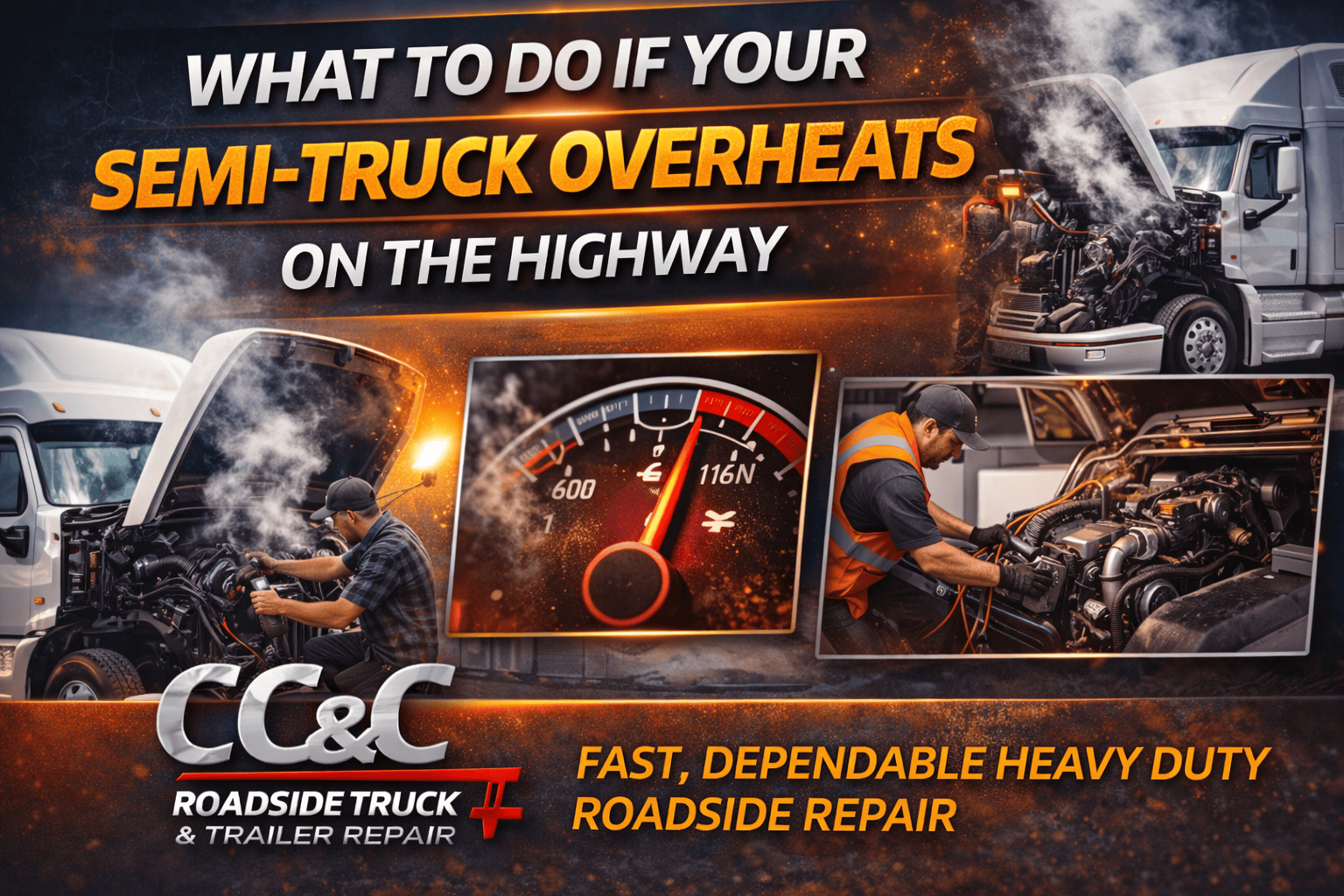
Semi-Truck Overheating on the Highway – What to Do? An overheating semi-truck is not something you can ignore. When your temperature gauge spikes into the red, every second matters. Continuing to drive with an overheating diesel engine can lead to blown head gaskets, warped cylinder heads, cracked components, and extremely expensive repairs.

Semi-Truck Overheating on the Highway
If your semi-truck starts overheating on the highway, here’s what to do immediately — and what to avoid.
Step 1: Watch the Temperature Gauge
Your first warning sign is usually the engine temperature gauge climbing higher than normal. You may also notice:
-
Warning lights on the dash
-
Reduced engine power
-
Steam coming from under the hood
-
A burning smell
If the gauge is rising rapidly, act quickly before serious damage occurs.
Step 2: Ease Off the Throttle
Do not slam on the brakes or continue pushing the engine.
Instead:
-
Gradually reduce speed
-
Turn off cruise control
-
Avoid heavy acceleration
-
Reduce engine load if possible
If you’re climbing a grade, overheating can happen quickly due to increased engine stress.
Step 3: Pull Over Safely
Get to the shoulder or a safe pull-off area as soon as possible.
Once stopped:
-
Turn on hazard lights
-
Set parking brakes
-
Shut down the engine
Continuing to run an overheated engine can multiply the damage within minutes.
Step 4: Do NOT Remove the Radiator Cap Immediately
This is critical. When a diesel engine overheats, the cooling system becomes highly pressurized. Removing the radiator cap too soon can cause severe burns from hot coolant and steam.
Allow the engine to cool down completely before inspecting the cooling system.
Step 5: Check for Common Causes
After the engine has cooled, look for visible issues such as:
-
Coolant leaks under the truck
-
Broken or loose radiator hoses
-
Damaged belts
-
Low coolant levels
-
Debris blocking the radiator
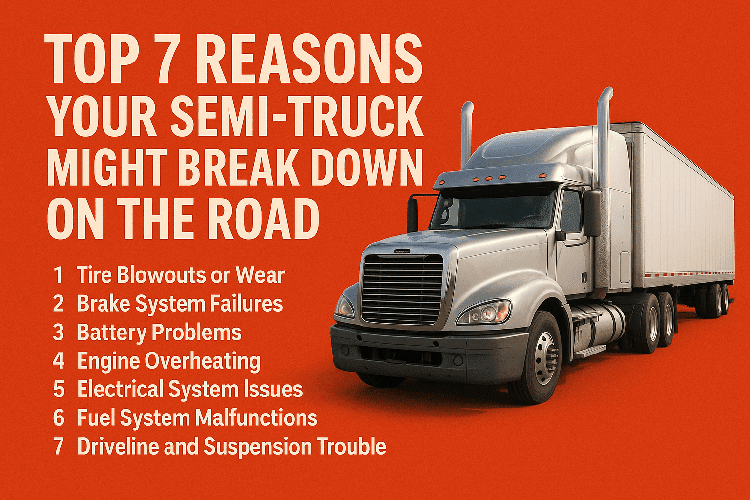
Common overheating causes include:
-
Coolant leaks
-
Failed water pumps
-
Malfunctioning thermostats
-
Clogged radiators
-
Cooling fan failures
Heavy loads and extreme heat can make minor cooling issues worse.
Step 6: Avoid “Temporary Fix” Mistakes
It may be tempting to top off coolant and keep driving. But if there’s a leak or mechanical failure, the problem will return — often worse.
Driving an overheating semi-truck can lead to:
-
Head gasket failure
-
Engine seizure
-
Turbo damage
-
Major downtime
When in doubt, call for professional roadside assistance.
Why Overheating Happens on the Highway
Semi-trucks operate under heavy stress, especially when:
-
Hauling maximum loads
-
Climbing steep grades
-
Driving in extreme heat
-
Idling for long periods
-
Running with dirty cooling systems
Preventative maintenance plays a major role in avoiding highway overheating emergencies.
Call for Fast Roadside Cooling System Repair
If your semi-truck overheats and you’re unsure of the cause, professional diagnostics are essential. CC&C Roadside Truck & Trailer Repair provides emergency roadside service for overheating trucks throughout Madisonville, Tennessee and surrounding areas.
Their technicians can diagnose coolant leaks, replace hoses, inspect water pumps, repair belts, and identify cooling system failures on-site — helping minimize downtime and prevent catastrophic engine damage.
Protect Your Engine — Act Fast
An overheating engine is one of the most serious roadside emergencies a truck driver can face. Acting quickly, shutting down safely, and avoiding risky shortcuts can mean the difference between a minor repair and a full engine rebuild.
If your semi-truck overheats on the highway, don’t gamble with your engine. Get safe, get it checked, and get back on the road the right way.
CC&C Roadside Truck & Trailer Repair – Keeping You Moving
423-442-3601
After Hours Emergency Line
423-404-3633