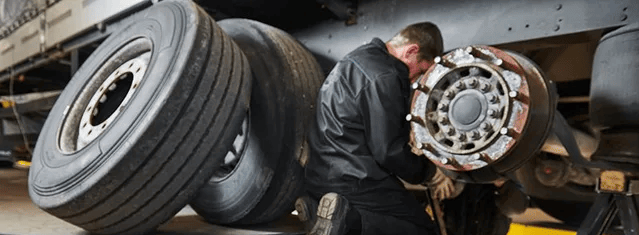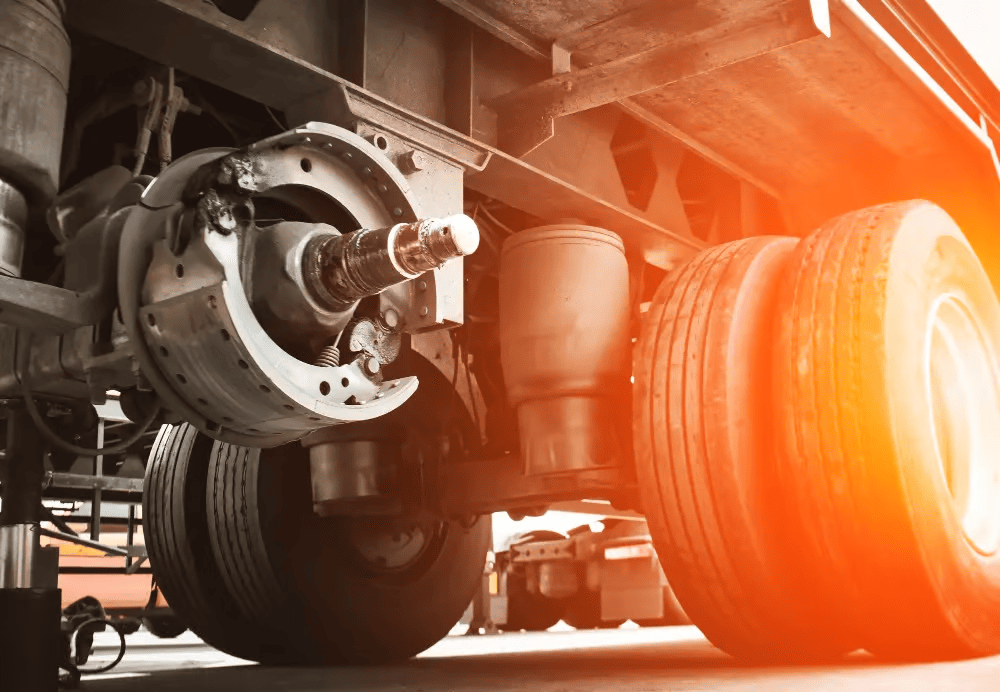
Truck Air Brake Problems: Common Warning Signs Every Truck Driver Should Know. Air brakes are one of the most important safety systems on any commercial truck. When they’re working properly, drivers may not give them much thought. But when an air brake problem develops, it can quickly become a serious safety issue that leaves a truck stranded—or puts it out of service during an inspection.
Truck Air Brake Problems
At CC&C Roadside Truck & Trailer Repair, we help commercial drivers and fleet operators diagnose and repair truck and trailer problems on the road. Knowing the early warning signs of air brake trouble can help you address a small problem before it becomes a costly breakdown.
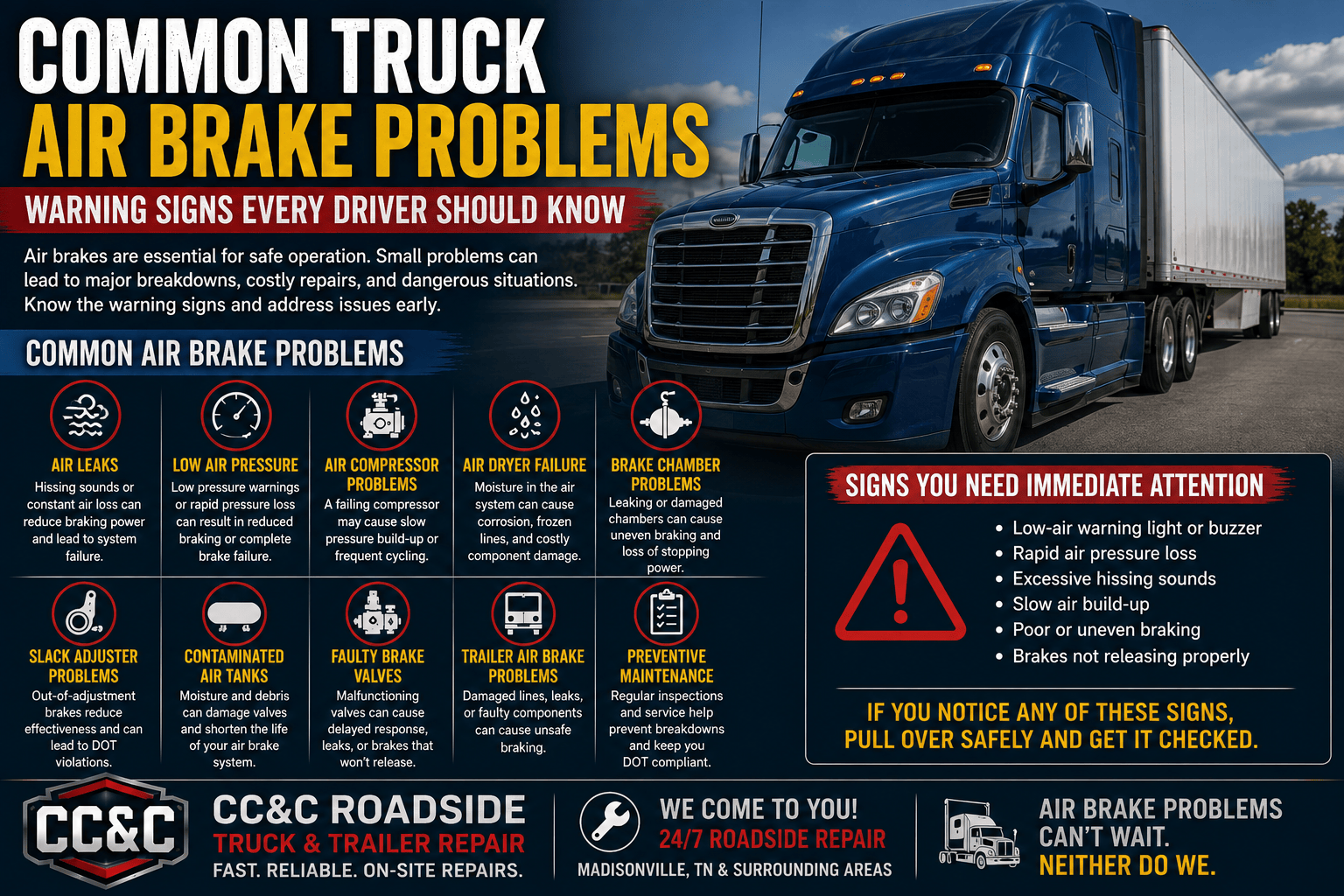
Here are some of the most common truck air brake problems and the symptoms drivers should never ignore.
1. Air Leaks
Air leaks are among the most common problems in commercial truck braking systems. Because air brakes depend on maintaining adequate pressure, even a relatively small leak can eventually affect system performance.
Leaks can develop in:
- Air hoses and lines
- Fittings and connections
- Brake chambers
- Air tanks
- Valves
- Gladhand connections
- Trailer air lines
A noticeable hissing sound is often the first indication of an air leak.
If your truck struggles to maintain normal air pressure or the compressor seems to run more frequently than usual, the system should be inspected as soon as possible.
2. Slow Air Pressure Build-Up
Your truck should build air pressure within its normal operating range after startup. If pressure takes significantly longer than usual to build, there may be a problem somewhere in the system.
Possible causes include:
- Air leaks
- Worn air compressor
- Restricted air lines
- Faulty valves
- Air dryer problems
Slow pressure build-up shouldn’t be dismissed as an inconvenience. It may indicate that the system cannot produce or retain enough air for safe braking.
3. Low Air Pressure Warnings
A low-air warning light or buzzer is something every commercial driver should take seriously.
If air pressure drops below a safe operating level while driving, braking performance can be affected. Continued pressure loss can ultimately cause the spring brakes to engage.
If you receive a low-air warning while driving, safely get off the road and investigate the problem rather than attempting to continue your trip.
4. Air Compressor Problems
The air compressor supplies compressed air to the truck’s braking system. A failing compressor may prevent the system from building or maintaining adequate pressure.
Warning signs can include:
- Slow pressure build-up
- Low-air warnings
- Unusual compressor noises
- Excessive compressor cycling
- Oil contamination in the air system
Because the compressor is essential to air brake operation, suspected compressor problems should be diagnosed promptly.
5. Air Dryer Failure
The air dryer removes moisture and contaminants from compressed air before they enter the air tanks and braking system.
When the air dryer isn’t functioning correctly, moisture can accumulate inside the system.
This can contribute to:
- Corrosion
- Valve problems
- Contaminated air tanks
- Reduced component life
- Frozen air lines during cold weather
Regularly servicing the air dryer can help protect the entire braking system.
6. Brake Chamber Problems
Brake chambers convert air pressure into the mechanical force that applies the brakes.
A damaged diaphragm, leaking chamber, or other internal problem can reduce braking performance.
Potential symptoms include:
- Air leaking near a wheel
- Uneven braking
- Reduced braking force
- Difficulty maintaining air pressure
Brake chambers are critical safety components and should be inspected when problems are suspected.
7. Slack Adjuster Problems
Slack adjusters help maintain the proper relationship between the brake chamber pushrod and braking components.
Excessive brake stroke can reduce braking effectiveness and may result in an out-of-service condition during a roadside inspection.
Drivers should pay attention to changes in braking performance and ensure the braking system receives regular professional inspections.
8. Contaminated Air Tanks
Compressed air naturally creates moisture within an air system. If moisture and contaminants aren’t properly controlled, they can collect inside the air tanks.
Excessive contamination may lead to:
- Internal corrosion
- Damaged valves
- Restricted airflow
- Air system failures
Routine inspection and maintenance help prevent moisture from becoming a larger problem.
9. Faulty Brake Valves
Commercial air brake systems rely on numerous valves to control where and when compressed air flows.
These may include relay valves, check valves, protection valves, and other components.
A malfunctioning valve can cause:
- Delayed braking
- Uneven brake application
- Air leaks
- Brakes that don’t release properly
- Pressure problems
Valve issues can sometimes be difficult to diagnose without inspecting the complete air system.
10. Trailer Air Brake Problems
The tractor isn’t the only place air brake problems occur. Trailer brake systems can develop many of the same issues.
Common trailer problems include:
- Damaged air lines
- Leaking gladhand connections
- Faulty brake chambers
- Valve problems
- Brake adjustment issues
- Damaged hoses
- Air leaks
Drivers should include trailer brake components and connections during every pre-trip inspection.
Signs Your Air Brake System Needs Immediate Attention
Some symptoms shouldn’t wait until your next scheduled maintenance appointment.
Pay particular attention if you notice:
- Low-air warning lights or alarms
- Rapidly falling air pressure
- Constant compressor operation
- Excessive hissing
- Slow pressure build-up
- Poor braking performance
- Truck pulling while braking
- Brakes failing to release normally
- Unusual noises during braking
If the truck cannot maintain safe air pressure or braking performance is compromised, continuing to drive can be dangerous.
Preventing Air Brake Problems
Regular preventive maintenance is one of the best ways to reduce air brake failures.
Drivers and fleet managers should make air brake inspections part of their normal maintenance routine. This includes inspecting air lines, connections, brake chambers, compressor operation, air dryer condition, and other critical components.
Daily pre-trip inspections are equally important. A few minutes spent checking the braking system before leaving can identify problems that might otherwise result in hours of roadside downtime.
Don’t Ignore Small Air Leaks
One of the biggest mistakes drivers can make is ignoring a small air leak because the truck still appears to build adequate pressure.
Small leaks rarely fix themselves. Instead, damaged hoses, fittings, seals, or other components can deteriorate until the truck can no longer maintain sufficient pressure.
Repairing the problem early can often save time, money, and frustration later.

Get Back on the Road With CC&C Roadside Truck & Trailer Repair
When an air brake problem leaves your truck or trailer on the side of the road, you need dependable assistance as quickly as possible.
CC&C Roadside Truck & Trailer Repair provides mobile truck and trailer repair services throughout Madisonville, TN, and surrounding areas, helping commercial drivers and fleets minimize downtime and get their equipment moving again.
Whether you’re dealing with an air leak, pressure problem, brake chamber issue, trailer brake malfunction, or another mechanical problem, our roadside repair services bring assistance directly to your location.
Your brakes aren’t something to gamble with. If your truck begins showing signs of an air brake problem, address it before a minor issue becomes a major breakdown.
CC&C Roadside Truck & Trailer Repair — helping keep trucks, trailers, and businesses moving.
#AirBrakes #TruckBrakes #TruckRepair #RoadsideTruckRepair #SemiTruckRepair #TruckMaintenance #FleetMaintenance #CommercialTruckRepair #TrailerRepair #DieselMechanic #TruckSafety #TruckDriver #OwnerOperator #TruckingIndustry #PreventiveMaintenance