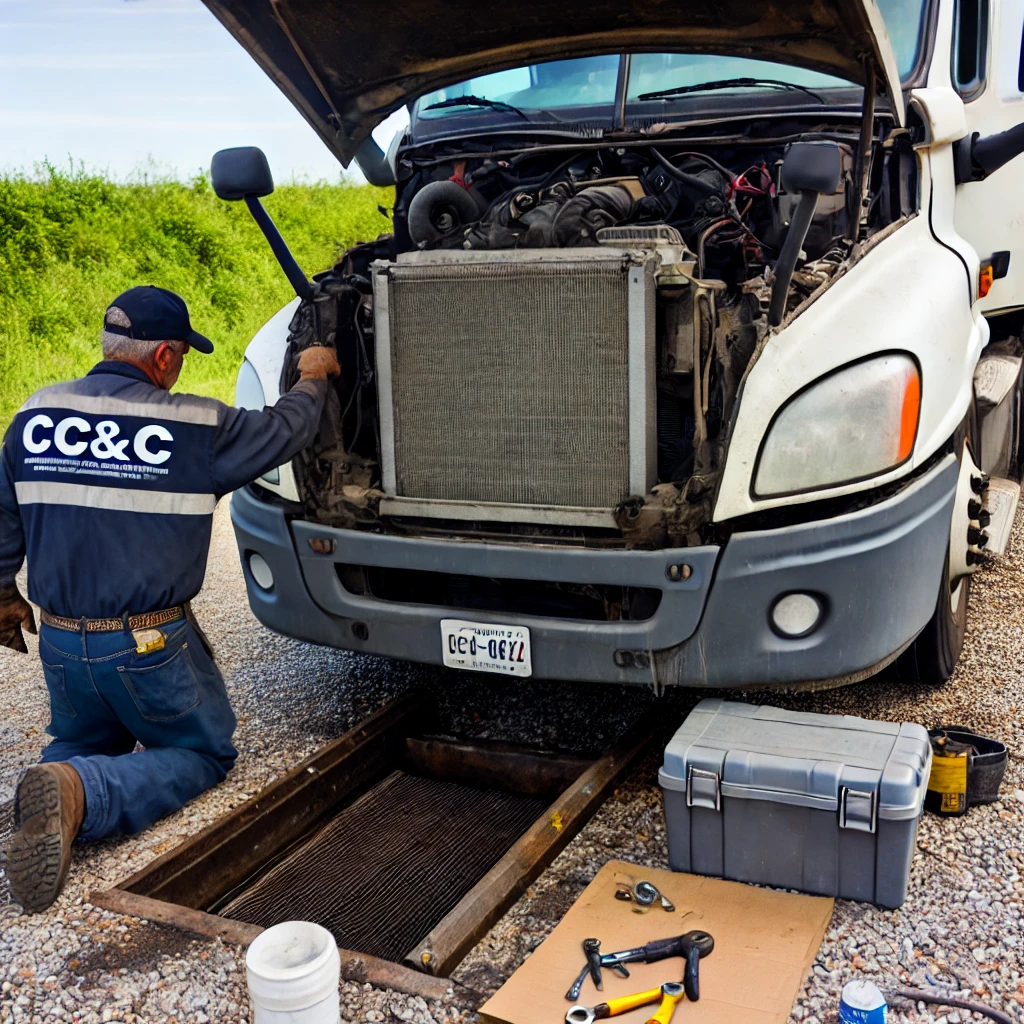
Semi Truck Coolant Leak: Causes, Warning Signs & What to Do. A coolant leak in a semi truck can start as a small problem and quickly turn into an expensive roadside breakdown. Your truck’s cooling system is responsible for keeping the engine within a safe operating temperature, and when coolant escapes, the engine can overheat surprisingly fast.
Semi Truck Coolant Leak
For commercial drivers and fleet operators, ignoring a coolant leak can mean more than a repair bill. It can lead to engine damage, lost driving time, missed deliveries, towing expenses, and potentially thousands of dollars in additional repairs.
At CC&C Roadside Truck & Trailer Repair, we provide mobile truck and trailer repair throughout Madisonville, Tennessee, and surrounding East Tennessee communities. If your semi truck is losing coolant, here are some of the most common causes, warning signs, and steps you should take.
How Do You Know If Your Semi Truck Is Leaking Coolant?
Some coolant leaks are obvious. Others may only appear while the engine is hot and the cooling system is under pressure.
Common warning signs include:
- Coolant underneath the truck
- Low coolant warning
- Frequently needing to add coolant
- Rising engine temperature
- Engine overheating
- Steam from the engine compartment
- A sweet or unusual odor
- Visible coolant around hoses or fittings
- Reduced cab heater performance
- Coolant residue around cooling-system components
If you’re repeatedly adding coolant, don’t assume that’s normal. Coolant is contained within a closed system, so recurring coolant loss should be investigated.
1. Damaged or Deteriorated Coolant Hoses
Commercial trucks operate for long hours under demanding conditions. Over time, coolant hoses can become brittle, cracked, swollen, or damaged.
A hose may develop a small leak initially and then fail completely.
Drivers and technicians should inspect hoses for:
- Cracks
- Bulges
- Soft spots
- Abrasion
- Coolant residue
- Loose connections
Replacing a deteriorating hose before it fails is much less expensive than dealing with an overheated engine on the highway.
2. Loose or Damaged Hose Clamps
Sometimes the hose itself isn’t the problem.
A loose, damaged, or improperly seated clamp can allow coolant to escape where the hose connects to another cooling-system component.
These leaks may be relatively minor at first and become more noticeable as the cooling system heats up and builds pressure.
3. Radiator Leaks
The radiator is constantly exposed to heat, vibration, road debris, corrosion, and thousands of miles of operation.
Leaks can develop in the radiator core, tanks, seams, fittings, or connections.
Signs of a radiator leak may include:
- Coolant beneath the front of the truck
- Visible wet spots
- Dried coolant residue
- Low coolant levels
- Increasing engine temperature
A small radiator leak shouldn’t be ignored simply because the truck isn’t overheating yet.
4. Water Pump Problems
The water pump circulates coolant through the engine and cooling system.
A failing water pump can leak coolant or stop circulating it effectively. Either situation can eventually cause overheating.
Possible warning signs include:
- Coolant leaking near the water pump
- Engine overheating
- Unusual bearing or grinding noises
- Coolant residue around the pump
- Increasing operating temperatures
A water pump problem requires prompt attention because the cooling system cannot function properly without adequate circulation.
5. Coolant Reservoir or Surge Tank Problems
The coolant reservoir or surge tank can develop cracks, damaged fittings, or cap problems.
Plastic components are exposed to repeated heating and cooling cycles, which can eventually cause deterioration.
Inspect the tank and surrounding connections if coolant appears to be disappearing without an obvious hose or radiator leak.
6. Faulty Pressure Cap
The cooling system depends on maintaining the proper pressure.
A damaged or failing pressure cap may allow coolant or pressure to escape prematurely.
Although the cap is relatively small compared with other cooling-system components, a malfunction can contribute to coolant loss and overheating.
7. Thermostat Housing Leaks
The thermostat regulates coolant flow based on engine temperature.
Leaks can develop around the thermostat housing or its seals and gaskets.
Coolant residue around the housing may indicate a developing problem even if a large puddle hasn’t formed beneath the truck.
8. Heater Hose or Heater-Core Leaks
The cooling system also supplies hot coolant to the cab’s heating system.
Damaged heater hoses, fittings, or the heater core can result in coolant loss.
Depending on the location of the leak, you may notice:
- Coolant odor inside or around the cab
- Reduced heater performance
- Wet areas
- Falling coolant levels
These leaks can be easier to overlook because they may not occur near the radiator or engine.
9. EGR Cooler Problems
On many modern diesel engines, the EGR cooler uses engine coolant to reduce exhaust-gas temperatures.
A failing EGR cooler can potentially result in coolant loss that isn’t immediately visible underneath the truck.
Possible symptoms may include:
- Unexplained coolant loss
- White exhaust smoke or vapor
- Cooling-system pressure issues
- Engine warning lights
- Overheating
Because internal coolant loss can have several possible causes, proper diagnosis is important.
10. Head Gasket or Internal Engine Problems
Not every coolant leak ends up on the ground.
A damaged head gasket or another internal engine problem can allow coolant to enter areas where it doesn’t belong.
Potential warning signs include:
- Unexplained coolant loss
- White exhaust smoke
- Overheating
- Cooling-system pressure problems
- Contaminated engine oil
- Bubbles or unusual pressure in the cooling system
Internal coolant loss can indicate a serious engine problem and should be diagnosed as quickly as possible.
Why Is My Semi Truck Losing Coolant but Not Leaking?
This is an important question because drivers sometimes assume there’s no leak if they don’t see a puddle.
Coolant can disappear without leaving an obvious spot underneath the truck.
Possible explanations include:
- A leak that occurs only when the system is hot
- Coolant evaporating from a hot engine component
- EGR cooler problems
- Heater-system leaks
- Pressure-cap problems
- Internal engine leaks
A cooling-system pressure test and professional inspection can often help locate leaks that aren’t immediately visible.
Can a Coolant Leak Cause a Semi Truck to Overheat?
Absolutely.
When coolant levels become too low, the cooling system may no longer be able to remove enough heat from the engine.
An overheating engine can potentially damage:
- Cylinder heads
- Head gaskets
- Pistons
- Cylinder liners
- Turbocharger components
- Seals and gaskets
- Other expensive engine components
The cost of repairing a coolant leak is usually insignificant compared with the potential cost of severe engine damage caused by overheating.
Can You Drive a Semi Truck With a Coolant Leak?
Whether the truck can be moved safely depends on the severity and cause of the leak.
A small leak doesn’t necessarily mean immediate engine failure, but coolant loss can accelerate unexpectedly.
Stop driving and seek assistance if you notice:
- Rapid coolant loss
- Engine overheating
- Steam from the engine compartment
- A rapidly rising temperature gauge
- A severe coolant warning
- Large amounts of coolant beneath the truck
- White smoke accompanied by coolant loss
Continuing to drive an overheating diesel engine can transform a relatively straightforward cooling-system repair into a major engine repair.
What Should You Do If Your Semi Truck Starts Leaking Coolant?
If you notice a significant coolant leak while driving, find a safe location to pull over.
Shut the engine down if temperatures are becoming unsafe and allow the engine to cool.
Never remove a pressurized cooling-system cap from a hot engine. Hot coolant and steam can escape under pressure and cause severe burns.
Once the system has cooled sufficiently, a technician can inspect the truck to determine where the coolant is escaping.
Don’t Just Keep Adding Coolant
Repeatedly topping off the cooling system may temporarily keep the truck moving, but it doesn’t repair the problem.
A small leak can suddenly become a major leak when a hose, fitting, radiator, water pump, or another component fails completely.
If you’re regularly adding coolant, treat it as a warning sign.
Finding the source early can save you from a much larger repair later.
How to Help Prevent Coolant Leaks
Preventive maintenance can catch many cooling-system problems before they result in a breakdown.
Drivers and fleet managers should routinely inspect:
- Coolant levels
- Coolant hoses
- Hose clamps
- Radiator condition
- Water pump area
- Reservoir or surge tank
- Belts
- Visible fittings and connections
- Signs of dried coolant residue
Pay attention to gradual changes in operating temperature as well. An engine that begins running hotter than usual may be providing an early warning.
Semi Truck Coolant Leak in East Tennessee? CC&C Can Help
If your semi truck is losing coolant, overheating, or developing a cooling-system problem on the road, getting the issue diagnosed quickly can help prevent expensive engine damage.
CC&C Roadside Truck & Trailer Repair provides 24/7 mobile truck and trailer repair from Madisonville, Tennessee, serving commercial drivers, owner-operators, and fleets throughout surrounding East Tennessee communities.
When possible, our mobile repair service brings troubleshooting and repairs directly to your location, helping minimize downtime and get your truck safely back on the road.
Don’t let a small coolant leak turn into a major engine repair. For roadside truck and trailer repair, call CC&C Roadside Truck & Trailer Repair at 423-404-3633.

Semi Truck Coolant Leak
CC&C Roadside Truck & Trailer Repair — We Keep You Moving
#SemiTruck #CoolantLeak #TruckRepair #TruckOverheating #DieselRepair #RoadsideTruckRepair #MobileTruckRepair #TruckMaintenance #FleetMaintenance #OwnerOperator