Why Trailer Electrical Failures Happen — and How Roadside Techs Fix Them. Trailer electrical problems rarely start with a dramatic failure — more often, they begin with a faint flicker, a dim marker light, or an ABS warning that most drivers hope will go away on its own. But those small signs usually point to bigger issues hiding within the wiring, connectors, or grounding system. Left unchecked, they can quickly snowball into a full electrical shutdown that leaves your rig stranded on the shoulder.

Why Trailer Electrical Failures Happen
At CC&C Roadside Truck & Trailer Repair in Madisonville, Tennessee, we’ve seen how fast these failures escalate, and we know exactly what it takes to troubleshoot and fix them right where you sit.
When Trailer Electrical Failures Strike, It’s More Than Just a Burnt-Out Bulb
Your trailer’s electrical system is the silent workhorse behind lights, brakes, anti-lock systems, refrigeration units, and more. Yet it’s also one of the most vulnerable parts on the road. From corroded connectors and frayed wiring to shorts, ground issues, and failed modules, electrical breakdowns can sneak up fast and halt your run hard. At CC&C Roadside Truck & Trailer Repair, we’ve seen how a small wiring fault can escalate into full system failure, leaving a rig stranded and costly downtime stacking up. Let’s look at why trailer electrical failures happen—and how roadside techs respond to get you back on the road.
🚧 Why Trailer Electrical Failures Happen
Faulty or Corroded Connectors
When plugs, sockets, or pigtails get exposed to moisture, road salt, or vibration, the connection can degrade. A loose pin, oxidized contact, or bent socket may interrupt power flow—for lights, ABS sensors, or trailer accessories.
Worn or Damaged Wiring Harness
Trailer wiring gets beaten up: constant movement, heat, abrasion against frame, and exposure to elements. Over time, insulation cracks, wiring rubs through or gets pinched when the trailer is loaded/unloaded. That can lead to shorts, open circuits, or erratic performance.
Poor Grounding or Frame Connections
An electrical system needs a solid ground return, especially on trailers. If the grounding strap or fastener becomes loose, rusted, or missing, the system can behave unpredictably—lights flicker, ABS faults come on, sensors drop out.
Load-Related Failures and Overloads
Modern trailers carry more electronic systems (refrigeration, telematics, lighting, monitoring). If circuits are overloaded or not protected properly, fuses blow, connectors overheat, or wiring suffers damage. Also, auxiliary systems may draw power when parked, draining batteries or creating parasitic loads.
Environmental and Maintenance Neglect
Moisture intrusion, salt corrosion, rodent damage, and years of vibration all contribute to failure. Regular inspections often skip trailer wiring and connectors, and that leaves you vulnerable.
🛠 How Roadside Techs Fix Trailer Electrical Failures
Step 1: Locate the Fault Zone
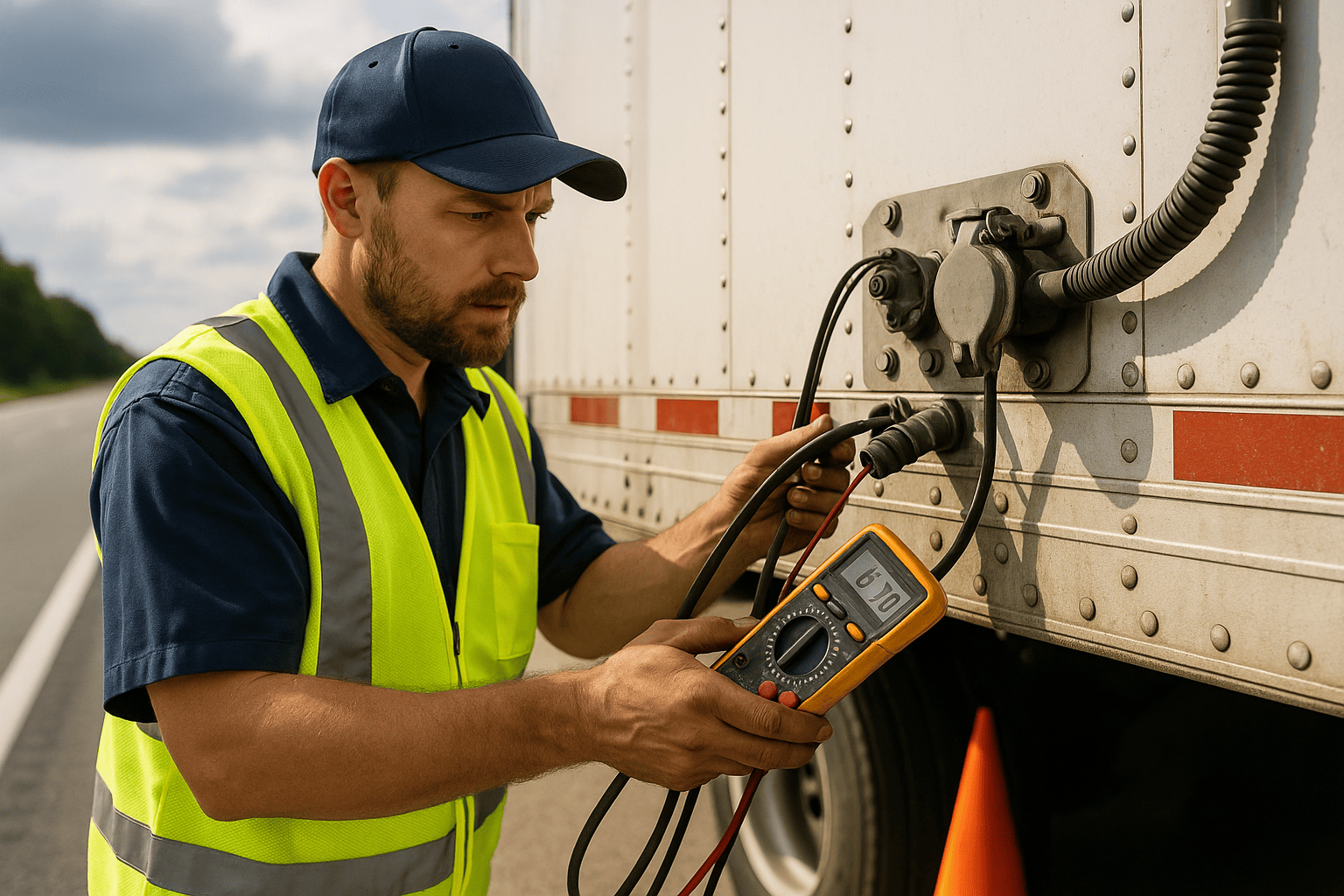
A skilled technician uses experience and tools (like a digital multimeter, circuit tracer, thermal camera) to identify the failure’s location—whether it’s a connector, ground strap, harness section, or module.
Step 2: Visual & Physical Inspection
They check plugs and pins for corrosion, ensure the harness is properly routed and secured, verify ground straps are tight and clean, and look for melted insulation or signs of heat damage.
Step 3: Repair or Replace Faulty Components
Depending on the issue, the tech will:
-
Clean and reseat or replace corroded connectors.
-
Repair or replace damaged wiring sections, with proper insulation and routing.
-
Re-establish solid ground connections.
-
Replace burned-out modules, sensors, or trailerside electronics if needed.
Step 4: Test the System
After repair, the trailer’s electrical system is tested: lights and marker lamps, turn signals, ABS modules, and any auxiliary components (reefer units, lift gates) are verified. The tech also monitors for any signs of intermittent faults or hidden issues.
Step 5: Preventive Measures and Documentation
The technician often applies dielectric grease to mates, secures wiring with clips or ties, protects against abrasion, and advises the driver or fleet manager on ongoing inspection intervals. Proper documentation helps ensure the repair was completed correctly and records the state for future service.
🔍 Why This Matters for Your Fleet
-
Electrical failures can lead to lights out, ABS faults, cargo-loss risk with reefers, or unexpected downtime.
-
A stranded trailer with no lighting or operating modules is not just delayed—it may be unsafe and non-compliant.
-
Having a roadside assistance team like CC&C, equipped to handle trailer electrical failures, ensures help is available and effective.
Final Thoughts
Trailer electrical issues might start small, but left unchecked they often become big problems. Whether it’s a flickering light, a cracked connector, or a dead ground strap, the signs are there. The key is catching them early and having a trusted partner ready to act. When you’re out on the road and your trailer’s electrical system fails, you want CC&C Roadside Truck & Trailer Repair on call. We’ll get you back rolling—fast, accurately, and safely.
CC&C Roadside Truck & Trailer Repair – Keeping You Moving
423-442-3601
After Hours Emergency Line
423-404-3633