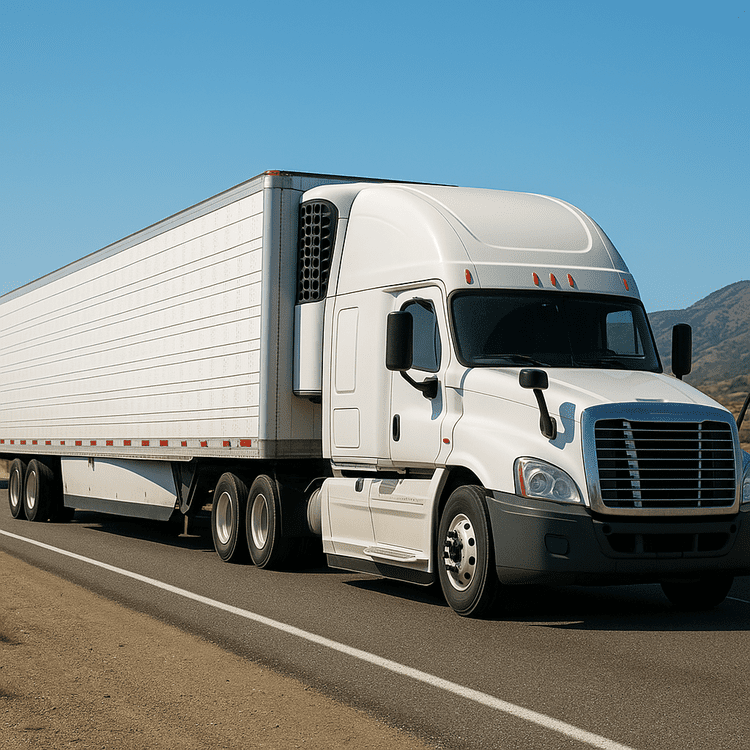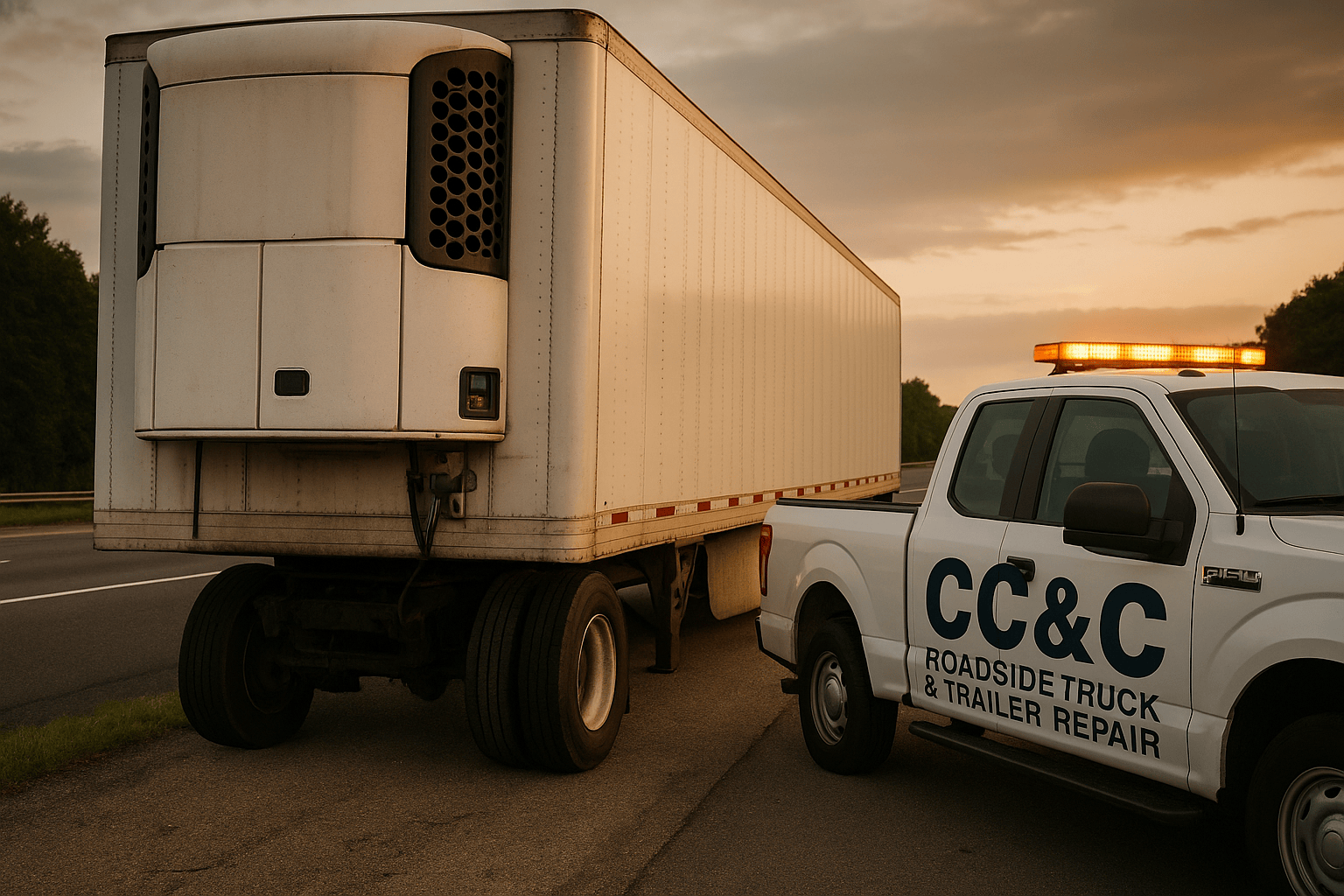
Trucking Roadside Repairs and FDA & Cold-Chain Compliance. When a refrigerated trailer breaks down mid-route, it’s not just an inconvenience—it’s a critical compliance challenge. Perishable goods like food, pharmaceuticals, and medical supplies depend on a tightly controlled cold chain, and even a short disruption can have costly consequences. The FDA holds carriers to strict standards for temperature control and sanitation, which means that every roadside repair must be handled with precision and care. At CC&C Roadside Truck & Trailer Repair in Madisonville, Tennessee, we understand that fixing the equipment is only half the job—the other half is protecting the integrity of your cargo and your compliance record.

Trucking Roadside Repairs and FDA & Cold-Chain Compliance
Why Cold-Chain Compliance Matters Even During Roadside Fixes
When a refrigerated trailer (reefer) breaks down on the road, it’s not just a mechanical emergency—it becomes a regulatory one too. Many products carried in reefer trailers (food, pharmaceuticals, biologics) are subject to strict temperature and sanitary rules under the FDA’s Sanitary Transportation of Human and Animal Food (STF) rule. Even temporary repairs must preserve the integrity of the cold chain to avoid product spoilage, regulatory violations, or cargo rejection. At CC&C Roadside Truck & Trailer Repair, we understand that every roadside intervention must respect both mechanical needs and legal standards.
What the FDA Requires for Cold-Chain Transport
Under the FDA’s final rule for sanitary transportation, all parties in the food supply chain—including carriers—must follow practices that prevent food from becoming unsafe. U.S. Food and Drug Administration Key provisions include:
-
Temperature Control: Equipment must maintain required temperatures; deviations must be minimized and documented.
-
Sanitary Conditions: Trailers and storage units must be clean, free of adulterants, and safe for food contact.
-
Training & Written Procedures: Personnel must be trained in sanitary practices and carriers must keep documented procedures.
-
Recordkeeping: Records of temperature logs, cleaning, maintenance, and training must be maintained, available, and retrievable. king emergency repairs—because a minor fix that compromises temperature or cleanliness can invalidate the entire load.
Trucking Roadside Repairs & Challenges That Threaten Compliance
During roadside repairs, certain risks to cold-chain compliance become acute:
-
Temperature excursions resulting from power loss, door openings, or broken cooling components
-
Cross-contamination from dirty tools or surfaces
-
Sanitation lapses when repair crews work in suboptimal surroundings
-
Lack of documentation or verification that repair actions were compliant
Any of these can turn a repair into a regulatory liability.
Best Practices for Cold-Chain–Safe Roadside Repairs
At CC&C, our repair protocols account for cold-chain compliance. Here’s how we ensure your load stays protected:
-
Rapid Diagnostics & Repair Strategy
We assess the cause of failure quickly and choose repair pathways that minimize temperature disturbance. -
Use of Food-Safe Tools & Clean Procedures
Our crews use sanitized tools, avoid contaminating the cargo space, and maintain cleanliness standards. -
Minimize Door Open Time
Doors are opened only when absolutely necessary, and cooling systems are re-engaged immediately. -
Backup Power & Refrigeration Bypass Plans
When possible, external cooling or power sources are used temporarily to maintain temperature. -
Document Everything
We record ambient/trailer temperature before and after repair, parts used, repair time, and technician notes. -
Communicate With Stakeholders
Carriers, shippers, and receivers are notified of the issue, steps taken, and outcomes to support traceability.
Real-World Impact: What’s at Stake
A breakdown in cold-chain integrity can lead to:
-
Total spoilage of cargo
-
Rejection at delivery or recall demands
-
Financial penalties or contract liability
-
Damage to reputation and liability exposure
By handling roadside repairs properly, CC&C helps carriers avoid these consequences.
Why CC&C Is the Right Roadside Partner for Reefers
When trouble strikes mid-route:
-
We operate 24/7, ready for refrigerated trailer repairs
-
Our technicians are trained in FDA-compliant repair methods
-
We carry spare cooling components, food-safe materials, and tracking tools
-
We ensure your repairs meet both mechanical and regulatory standards
You don’t just get a fix—you get a cold-chain–safe fix.
Final Thoughts
In the world of perishable and temperature-sensitive cargo, mechanical downtime and regulatory compliance go hand in hand. At CC&C Roadside Truck & Trailer Repair, we treat every reefer call as a compliance-critical mission: restoring function while safeguarding your cargo and meeting FDA expectations.
When your refrigeration system falters on the road, trust CC&C to keep your load cold, clean, and compliant.
CC&C Roadside Truck & Trailer Repair – Keeping You Moving
423-442-3601
After Hours Emergency Line
423-404-3633