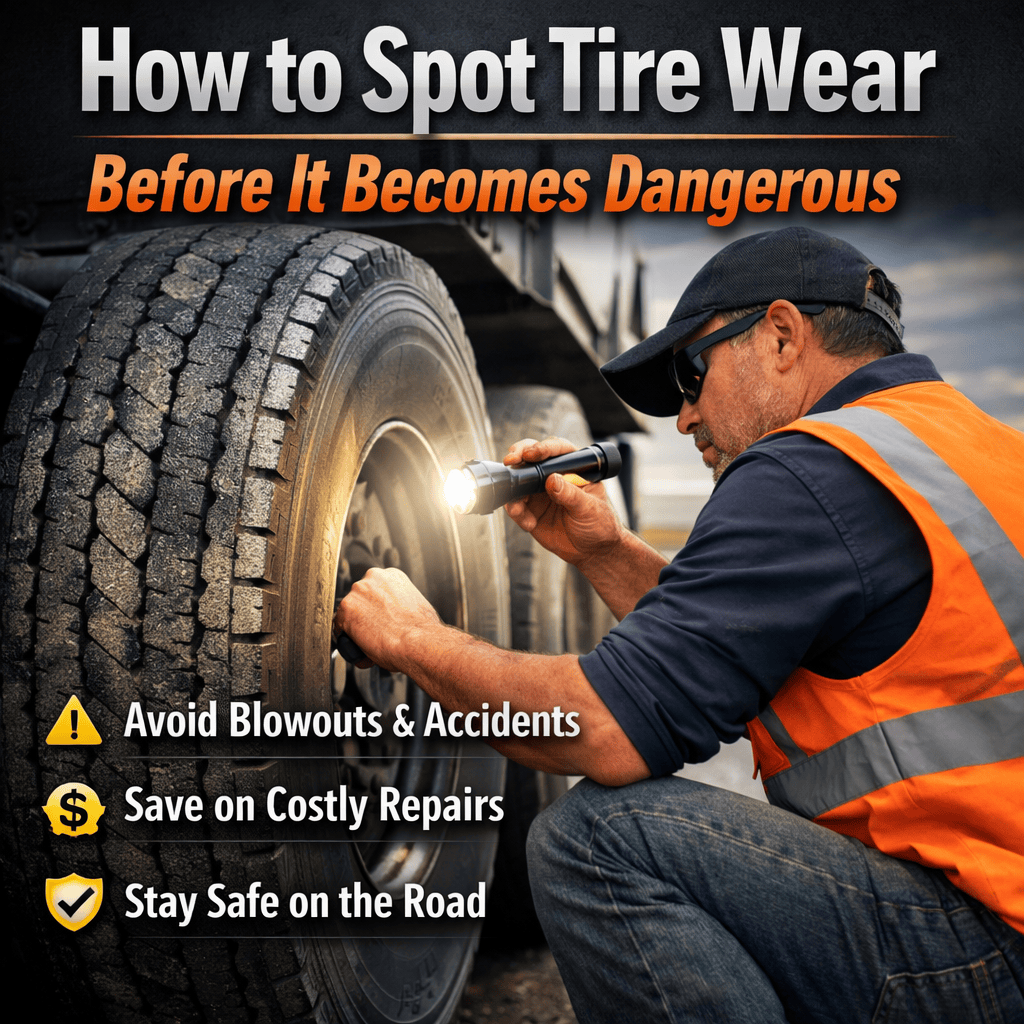
Truck and Trailer Tire Wear – How to Spot It Before It Becomes Dangerous. Keeping your truck on the road safely starts where the rubber meets the pavement. Tire wear might seem like a minor issue at first, but for commercial trucks and trailers, it can quickly turn into a serious safety hazard—and an expensive one. Knowing how to spot tire wear early can help you avoid blowouts, reduce downtime, and keep your operation running smoothly.

Truck and Trailer Tire Wear
Why Tire Wear Matters for Commercial Trucks
Tires on heavy-duty trucks endure extreme stress from long miles, heavy loads, and varying road conditions. Uneven or excessive wear doesn’t just shorten the life of your tires—it can impact handling, fuel efficiency, and braking performance. Ignoring early warning signs can lead to dangerous situations on the highway, especially at high speeds or under load.
Common Types of Tire Wear (and What They Mean)
1. Uneven Wear
If one side of the tire is more worn than the other, it’s often a sign of alignment issues. Poor alignment can cause your truck to pull to one side and increase fuel consumption.
2. Center Wear
When the middle of the tire tread wears faster than the edges, it typically means the tire is overinflated. Too much air pressure reduces the contact area with the road.
3. Edge Wear
If the outer edges of the tire wear down more quickly, underinflation is usually the cause. This puts more stress on the sides of the tire and increases the risk of overheating.
4. Cupping or Scalloping
This pattern looks like dips or waves around the tire surface. It’s often caused by suspension issues or worn shocks, and it can lead to a rough ride and reduced control.
5. Feathering
If the tread feels smooth in one direction and sharp in the other, it’s likely due to improper alignment. This can affect steering stability and tire longevity.
Warning Signs You Should Never Ignore
Even if you’re not inspecting tread patterns closely, there are clear warning signs that your tires may be wearing dangerously:
- Vibrations while driving
- Reduced traction, especially in wet conditions
- Increased stopping distance
- Visible cracks, bulges, or cuts
- Frequent loss of tire pressure
If you notice any of these issues, it’s time to take action before a minor problem turns into a roadside emergency.
How to Check Your Tires Properly
Routine inspections can make all the difference. Here’s what every driver or fleet manager should do:
- Check tread depth regularly – Use a tread depth gauge or the penny test
- Inspect tire pressure – Maintain manufacturer-recommended PSI levels
- Look for visible damage – Check for cuts, punctures, or embedded debris
- Examine wear patterns – Uneven wear can signal deeper mechanical issues
- Rotate tires as needed – Helps ensure even wear across all tires
The Cost of Ignoring Tire Wear
Failing to address tire wear doesn’t just risk safety—it can hurt your bottom line. Blowouts can cause costly delays, missed deliveries, and even damage to your truck or trailer. In some cases, they can also lead to DOT violations or fines.
Preventative maintenance is always more affordable than emergency repairs.
When to Call for Professional Help
If you’re unsure about the condition of your tires, it’s best to have them inspected by a professional. Mobile roadside repair services can quickly diagnose tire issues, correct inflation problems, and identify underlying causes like alignment or suspension faults.
Stay Safe and Keep Rolling
Tire wear is inevitable, but dangerous situations don’t have to be. By staying proactive and knowing what to look for, you can keep your truck operating safely and efficiently. Regular inspections, proper maintenance, and quick action when problems arise will help you avoid breakdowns and stay on schedule.
When in doubt, don’t wait—address tire issues early and keep your truck moving with confidence.
Don’t wait until tire wear leaves you stranded on the side of the road. At CC&C Roadside Truck & Trailer Repair in Madisonville, Tennessee, we’re committed to keeping your truck safe, reliable, and ready for the miles ahead. Whether you need emergency roadside assistance or preventative maintenance, our experienced team is available to get you back on the road quickly and efficiently. Trust CC&C to help you minimize downtime, avoid costly repairs, and keep your business moving forward.
CC&C Roadside Truck & Trailer Repair – Keeping You Moving
423-442-3601
After Hours Emergency Line
423-404-3633