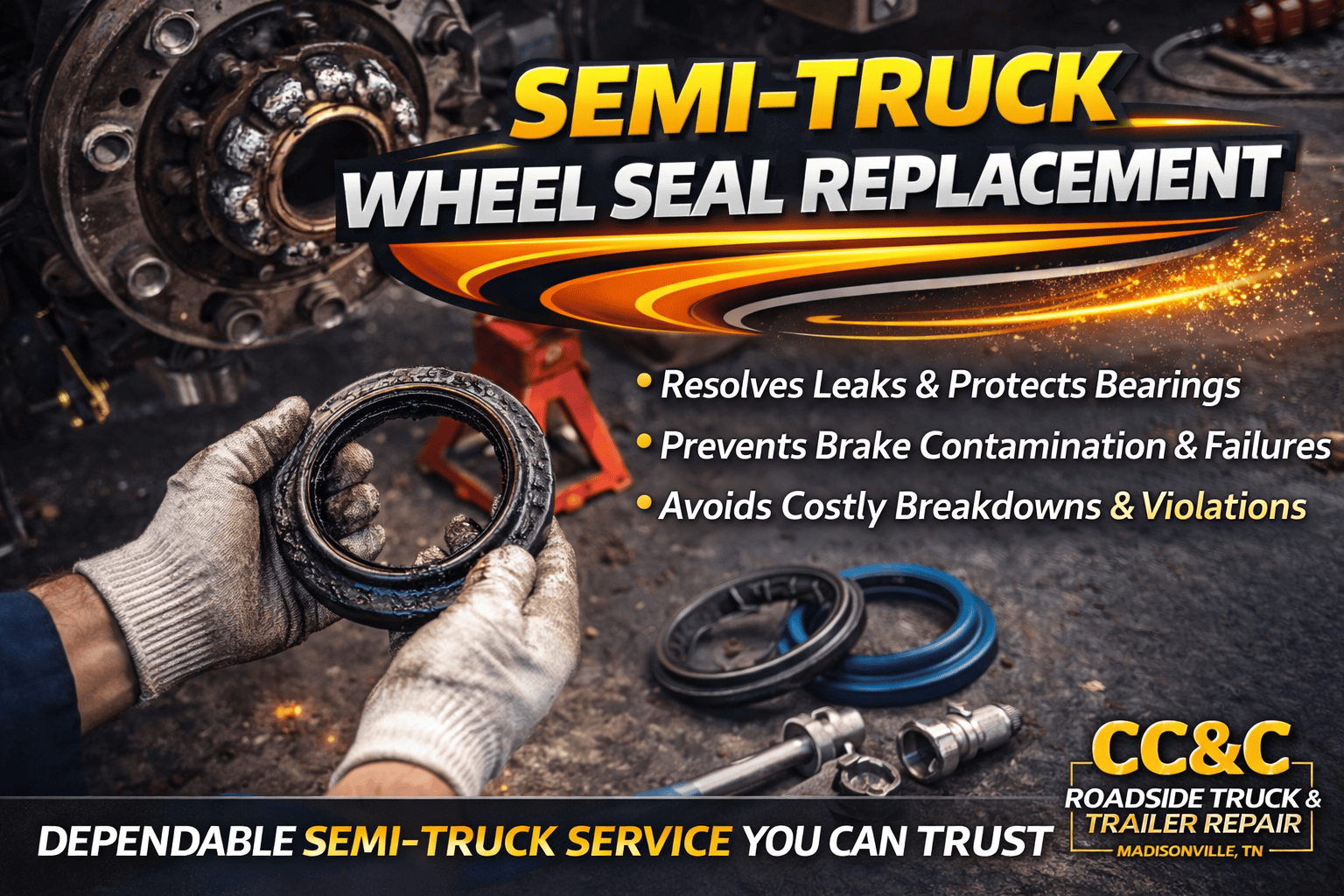
Semi-Truck Wheel Seal Replacement: What Truck Drivers and Fleet Managers Need to Know. A leaking wheel seal is one of those problems that can quietly turn into a major roadside breakdown if it’s ignored. On semi-trucks, wheel seals play a critical role in keeping lubricant inside the hub while preventing contaminants like dirt, water, and debris from getting in. When a wheel seal fails, it doesn’t just create a mess—it can lead to bearing failure, brake contamination, and serious safety risks.
Semi-Truck Wheel Seal Replacement
Understanding when and why wheel seal replacement is necessary can help drivers avoid costly downtime and protect their equipment.
What Is a Wheel Seal and Why It Matters
A wheel seal is designed to retain oil or grease inside the wheel hub while allowing the axle spindle and bearings to rotate smoothly. On semi-trucks, these components endure extreme heat, heavy loads, and long hours on the road.
When a wheel seal is functioning properly, it:
-
Keeps bearings properly lubricated
-
Prevents oil from leaking onto brakes
-
Protects internal components from moisture and debris
Once a seal begins to fail, the entire wheel-end assembly is at risk.
Common Signs of a Failing Wheel Seal
Wheel seal problems often start small but worsen quickly. Some of the most common warning signs include:
-
Oil or grease visible on the inside of the wheel or tire
-
Brake shoes or brake components soaked with oil
-
Burning smells near the wheel end
-
Reduced braking performance
-
Excessive hub heat
If oil reaches the brake system, stopping power can be compromised, making immediate repair critical.
Causes of Wheel Seal Failure
Several factors can contribute to wheel seal failure on semi-trucks, including:
-
Worn or damaged bearings
-
Improper installation during previous repairs
-
Overfilled hubs or incorrect lubricant type
-
Excessive heat from heavy loads or braking
-
Contaminated or degraded lubricant
Regular inspections help catch these issues before they escalate into full wheel-end failure.
The Wheel Seal Replacement Process
Proper wheel seal replacement is not just about swapping parts—it requires careful inspection and precision. The process typically includes:
-
Removing the wheel and hub assembly
-
Inspecting bearings, races, and spindle surfaces
-
Replacing worn or damaged bearings if necessary
-
Installing a new wheel seal using correct alignment tools
-
Refilling the hub with the proper lubricant
-
Reassembling and adjusting components to manufacturer specifications
Skipping steps or rushing this process can lead to premature seal failure and repeat repairs.
Why Timely Replacement Saves Money
Ignoring a leaking wheel seal often leads to far more expensive repairs. What starts as a seal replacement can quickly turn into:
-
Brake replacement
-
Bearing and hub damage
-
Roadside breakdowns
-
Out-of-service violations
Addressing wheel seal issues early helps reduce downtime, protects braking systems, and extends the life of wheel-end components.
Keep Your Wheels Turning Safely
Wheel seals may be small components, but they play a huge role in truck safety and reliability. Regular inspections, early detection of leaks, and professional replacement help prevent breakdowns and protect your investment.
When it comes to semi-truck wheel seal replacement, addressing the problem sooner rather than later keeps your truck rolling—and keeps costly surprises off the road.
Professional Wheel Seal Replacement You Can Trust
Wheel seal replacement requires experience, proper tools, and a clear understanding of heavy-duty wheel-end systems. CC&C Roadside Truck & Trailer Repair provides professional semi-truck wheel seal replacement and wheel-end inspections designed to keep trucks safe, compliant, and road-ready.
With real-world roadside experience, the team understands how critical reliable wheel-end repairs are—whether the truck is in the shop or stranded on the shoulder.

CC&C Roadside Truck & Trailer Repair – Keeping You Moving
423-442-3601
After Hours Emergency Line
423-404-3633