Low-Visibility Trucking Pullover Safety Deserves Extra Attention. When fog, heavy rain, snow, or dust storms roll in, even routine pullovers become dangerous. Reduced sightlines, glare from lights, and unpredictable traffic behavior all combine to make stopping on the shoulder more hazardous than usual. At CC&C Roadside Truck & Trailer Repair in Madisonville, Tennessee, we respond to breakdowns in every condition—and we know that how you pull over in low visibility can mean the difference between a safe stop and a disaster.

Low-Visibility Trucking Pullover Safety
We will cover the best practices for pulling over safely when you can’t see clearly—so you, your cargo, and other drivers stay protected until help arrives.
Common Visibility Hazards for Truckers
-
Fog and mist: Often greatest danger at dawn/dusk or in valleys
-
Heavy rain or snow: Wipes out sightlines and blinds drivers behind you
-
Dust storms / blowouts: Sudden drops in visibility, shifting winds
-
Night glare or oncoming headlights: Makes background contrast vanish
-
Smoke or wildfire conditions: Rare, but extremely disorienting
In all these cases, your margin for error shrinks. That’s why safe pullover technique becomes critical.
Step-by-Step: Safe Pullover Practices When You Can’t See Well
1. Don’t Brake Hard or Swerve Suddenly
-
Ease off the throttle gradually.
-
Avoid aggressive braking or sharp maneuvers that could lead to a jackknife or losing control.
-
Use your turn signals early to communicate your intention.
2. Move to the Safest Possible Spot
-
Choose a road shoulder, pullout, or emergency lane—not a curve or blind spot.
-
Try to aim where you’re visible to traffic approaching from behind.
3. Increase Your Visibility
-
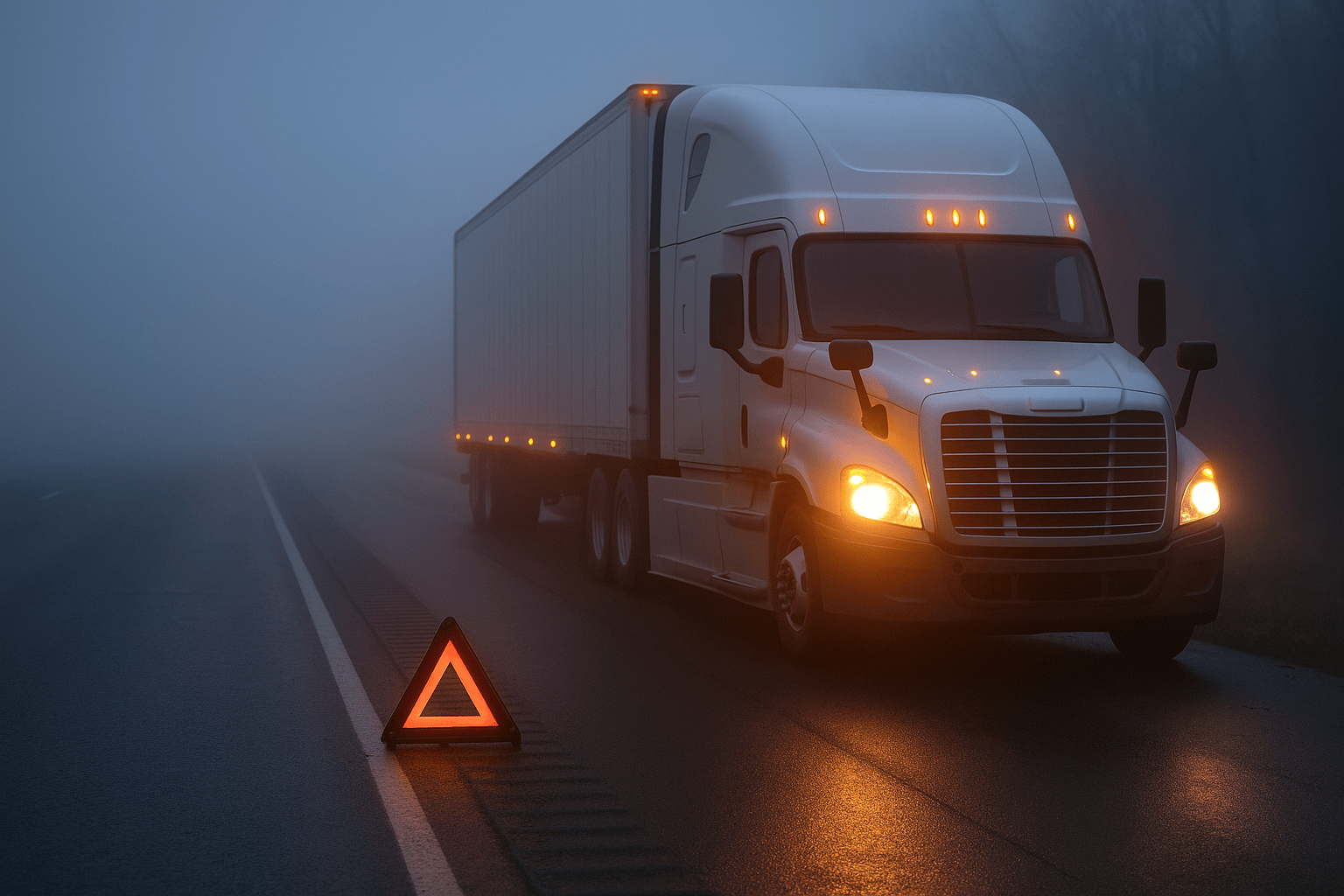
Immediately turn on your hazard lights.
-
Activate any additional marker lights or reflectors you may have (e.g. side-marker or trailer outline lights).
-
Use reflective triangles or flares behind the vehicle in accordance with safety rules (and adapt spacing given low visibility).
4. Stay in the Cab If It’s Too Unsafe to Exit
-
If visibility is extremely low or traffic is fast, staying inside with seatbelt on is safer.
-
Keep your hazards and marker lights active.
-
If you must exit, do so only when you’re sure you’re visible and away from road flow.
5. Communicate Location Clearly
-
Use your telematics/GPS to determine your exact position; share it with dispatch or roadside assistance.
-
Report nearest mile markers, landmarks, or roadway features.
-
Let CC&C know conditions and whether you’re fully off the road or partially blocking.
6. Wait for Assistance in a Safe Position
-
If possible, move behind guardrails or away from lanes.
-
Keep your doors locked until it’s safe to exit.
-
Stay alert for passing vehicles, and keep reflective gear on if you must walk.
Why These Steps Matter
-
Protect yourself from secondary accidents: Many collisions happen when other drivers don’t see a pulled-over vehicle until it’s too late
-
Reduce damage to your truck or cargo: A safe, controlled stop is less likely to jostle the load or strain your gear
-
Facilitate faster, safer roadside service: CC&C technicians can find you more easily when your pull-over is well executed
-
Maintain regulatory compliance: Bad pullovers can lead to DOT violations, especially if your trailer obstructs traffic or lacks proper lighting
How CC&C Supports You During Low-Visibility Emergencies
At CC&C Roadside Truck & Trailer Repair, we’re equipped to respond safely in all conditions—even when visibility is near zero. Here’s how we help:
-
Our dispatchers handle precise location data to guide our technicians to you
-
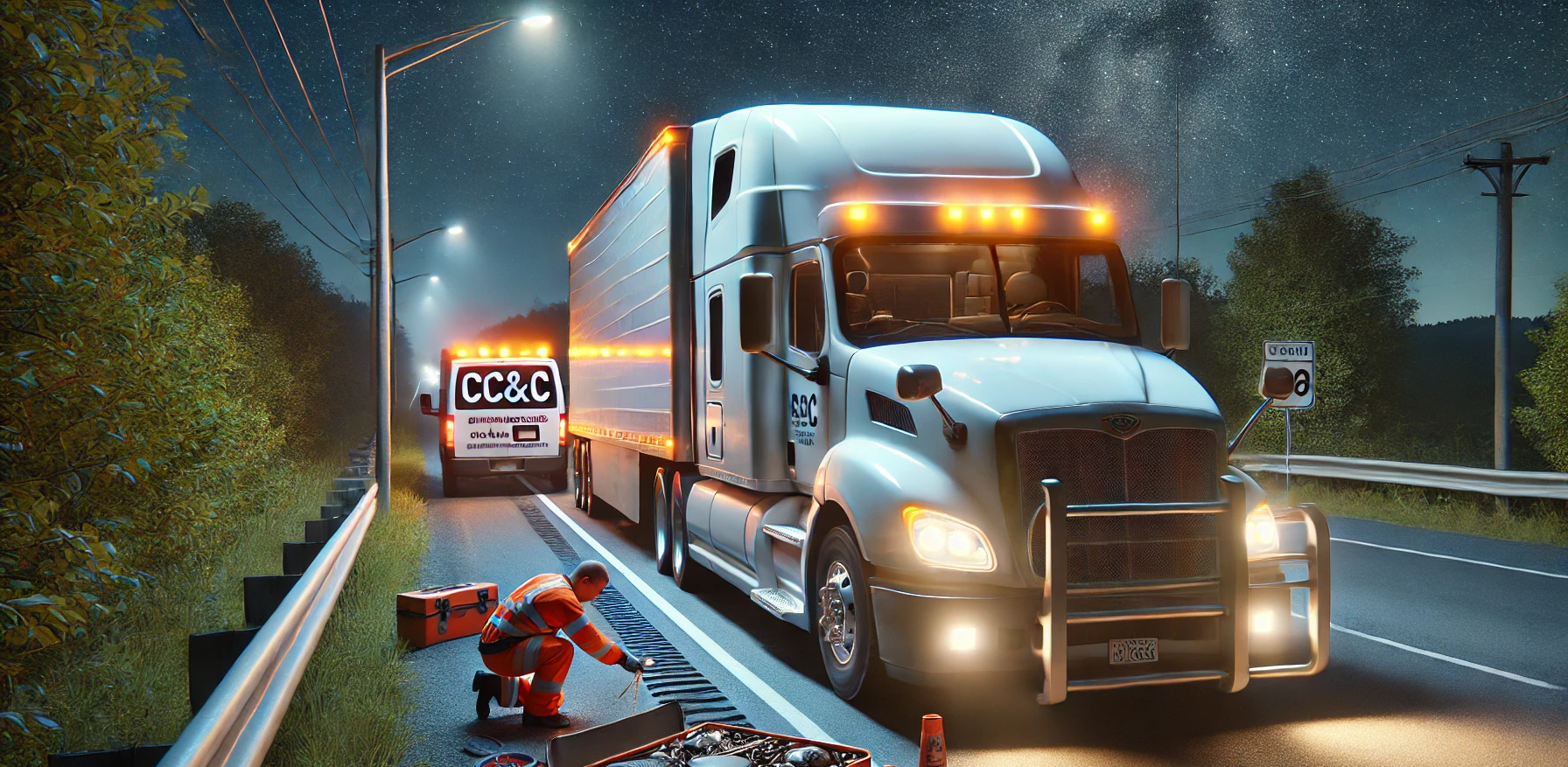
Our mobile crews arrive in fully equipped service trucks with lighting and safety gear
-
We understand low-visibility operations and how to approach a distressed rig safely
-
We coordinate with drivers remotely so you can stay in a safe position until help arrives
Final Thoughts
Low-visibility conditions demand respect, discipline, and a clear procedure for pulling over safely. The hazards are real—but knowing what to do can make all the difference. When you do everything by the book and then call in trusted professionals like CC&C Roadside Truck & Trailer Repair, you maximize your safety and minimize downtime.
Need help right now? Use your GPS or landmark data to contact us—we’ll guide you and get to you safely, regardless of what visibility looks like out there.
CC&C Roadside Truck & Trailer Repair – Keeping You Moving
423-442-3601
After Hours Emergency Line
423-404-3633