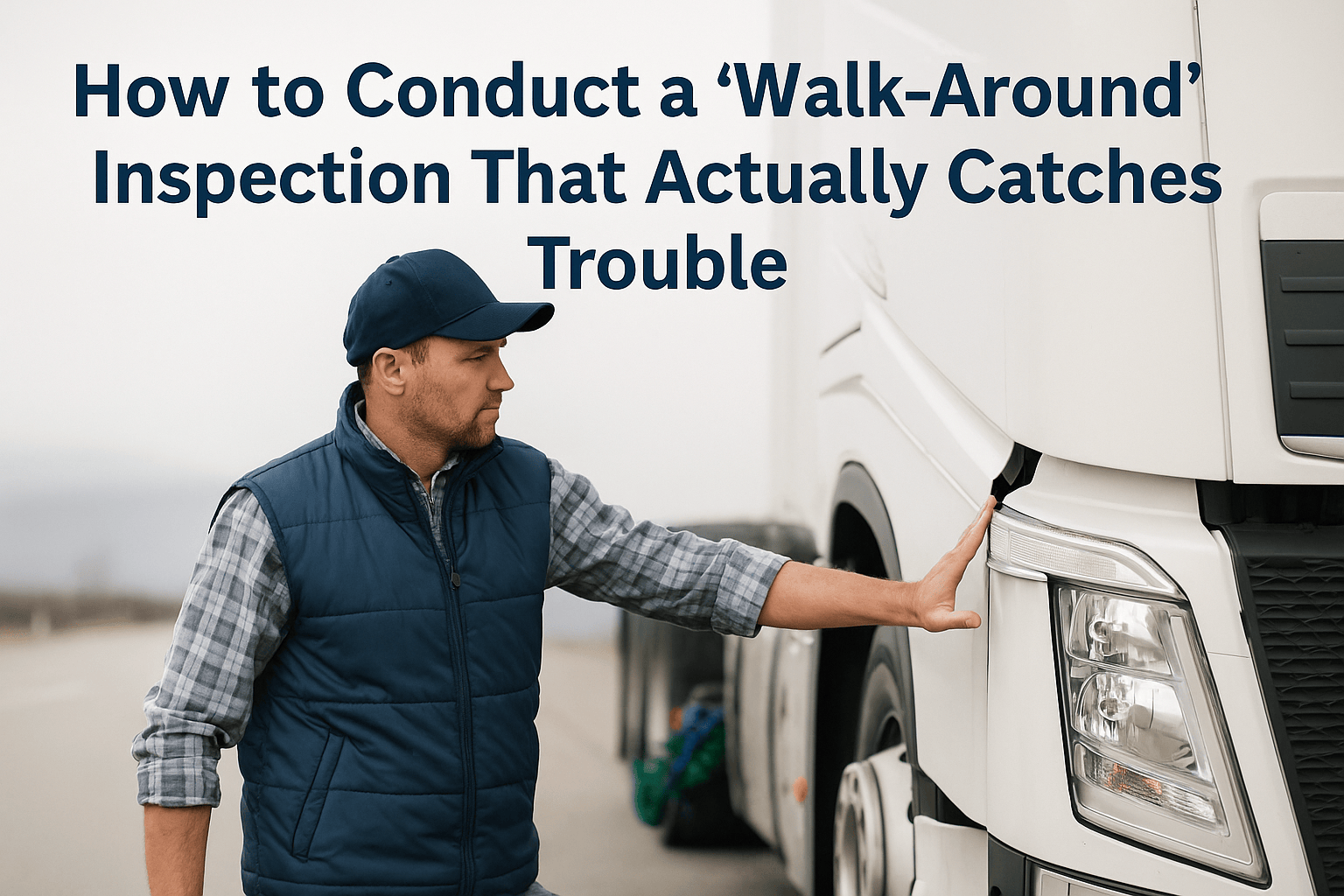
How to Conduct a “Walk-Around” Truck Inspection That Actually Catches Trouble. Every driver knows they’re supposed to do a walk-around inspection—but not everyone does it right. A rushed glance at the tires and a quick look at the lights isn’t enough to prevent costly breakdowns. A proper inspection is more than just routine; it’s your chance to catch small problems before they become roadside emergencies.

Walk-Around Truck Inspection
A thorough walk-around inspection is one of the simplest and smartest ways to keep your rig rolling safely and efficiently. It only takes a few extra minutes, but it can save you hours of downtime, costly repairs, and potential safety risks on the road. At CC&C Roadside Truck & Trailer Repair, we’ve seen firsthand how a few extra minutes spent doing a real, detailed walk-around can make the difference between staying on schedule and sitting on the shoulder waiting for help.
Why a Walk-Around Inspection Matters
A “walk-around” inspection isn’t just a formality—it’s your first line of defense against roadside breakdowns. Done properly, it lets you catch small problems before they become major failures, saving you money, time, and safety risks. At CC&C Roadside Truck & Trailer Repair, we often respond to calls that started with an overlooked issue during a poor walk-around. Let’s make yours more effective.
The Mindset: Be Systematic, Not Rushed
Before you start:
-
Treat the inspection as vital to your delivery—not something to skip when pressed for time.
-
Work in a fixed order, from cab to trailer rear (or vice versa)—don’t hop around aimlessly.
-
Use a checklist (mental or physical) to stay consistent every time.
-
Watch for anything out of the ordinary—sounds, smells, leaks, loose parts.
The goal isn’t speed—it’s accuracy.
Step-by-Step Walk-Around Inspection
Below is a structured route you can follow to ensure you catch what matters:
| Section | What to Check | Why It Matters |
|---|---|---|
| Front & Cab | Lights, mirrors, windshield wipers, fluid levels (engine oil, coolant, washer) |
Malfunctioning lights reduce your visibility; fluid low levels signal leaks
|
| Engine Compartment | Hoses (cracks, bulges), belts (tension, fraying), leaks, wiring |
Failures here often lead to breakdowns before you see them
|
| Front Axle & Steering | Tie rods, ball joints, power steering lines, U-joints |
Steering failure is a major safety hazard
|
| Frame & Crossmembers | Cracks, rust, missing bolts or weld failures |
Structural issues grow; a small crack can become disastrous
|
| Suspension & Air System | Leaf springs, airbags, shock absorbers, brake chambers, airline connections |
Suspension failure leads to erratic handling or trailer damage
|
| Brakes & Wheels | Rim damage, loose lug nuts, brake drums, hoses, air leaks |
Wheel or brake failures are common causes of roadside calls
|
| Trailer Undercarriage | Crossmembers, floorboards, cargo securement points |
Trailer issues often hide underneath
|
| Reefer or Trailer Equipment | Cooling unit, doors, seals, trailer lights, wiring |
Broken seals or cooling failure can wreck perishable loads
|
| Rear of Trailer | Lights, reflectors, doors, hinges, bumper, underride guard |
Don’t let your back end be your liability |
While doing each step:
-
Touch and listen: A loose bolt or part may rattle or move slightly under hand pressure.
-
Look for leaks: Oil, coolant, fuel, or air; even small drips matter.
-
Smell and inspect: Unusual smells (burning, fuel, oil) often accompany early mechanical issues.
-
Check tire appearance: Uneven wear, bulges, or foreign objects lodged in tread.
Common Issues You’ll Spot Early
-
A cracked hose near the engine that’s barely leaking
-
A frayed wiring sheath or harness rub point
-
One lug nut loose or missing
-
Minor air leak at a brake chamber
-
Worn suspension bushing making slight noise
-
Slight coolant seep around a joint
These may not stop you mid-trip—but if left, they can.
After the Walk-Around: What to Do Next
-
Note the issues: Record location, severity, and any parts you may need.
-
Prioritize: Some issues are critical (brakes, steering). Others can wait.
-
Temporarily mitigate if safe: Tighten what you can safely, adjust routing, reduce load or speed.
-
Call CC&C when needed: If any issue is beyond what your tool kit or skill set can handle, don’t press on. We offer 24/7 mobile service to handle everything from diagnosis to repair.
Why This Helps CC&C’s Customers
When your walk-around is thorough, roadside calls tend to be smarter:
-
We arrive better prepared (right tools, parts)
-
Fewer surprises mid-repair
-
Reduced downtime because the issue is already identified
-
Lower risk of compounding damage while waiting for service
Final Thoughts
A solid walk-around inspection isn’t about checking boxes—it’s about protecting your rig and your schedule. The time you invest upfront pays off in less breakdown risk, safer operation, and fewer roadside headaches. Let your senses guide you, use a consistent route, and remember: when you spot something you can’t fix, CC&C Roadside Truck & Trailer Repair is ready to help you right where you are.
CC&C Roadside Truck & Trailer Repair – Keeping You Moving
423-442-3601
After Hours Emergency Line
423-404-3633