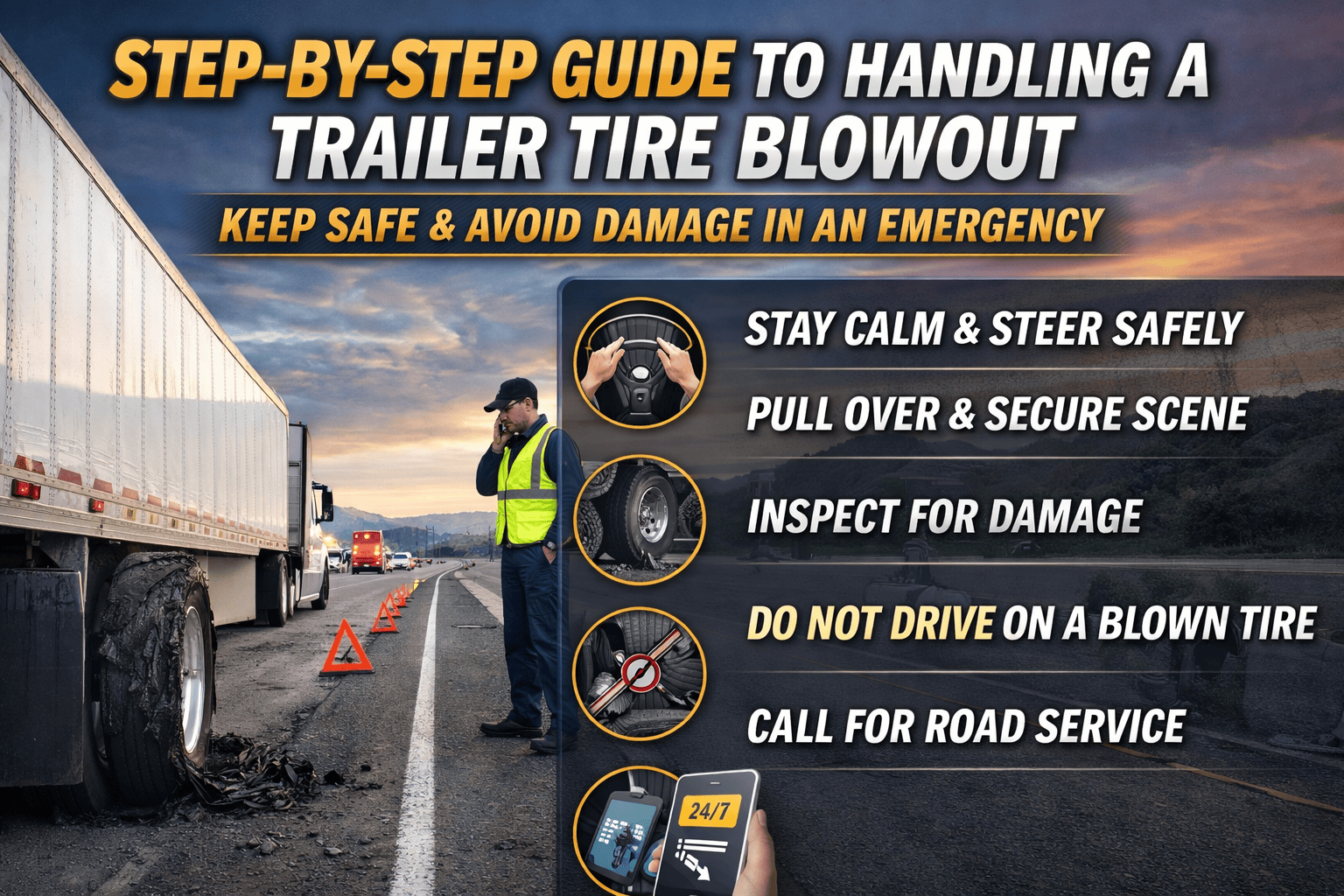
Handling a Trailer Tire Blowout – A Step-by-Step Guide. A trailer tire blowout is one of the most common—and most dangerous—situations a commercial driver can face. The sudden noise, vibration, and pull can be alarming, especially at highway speeds. Knowing exactly what to do in the moments after a blowout can prevent accidents, reduce damage to your trailer, and get you back on the road faster and safer.

Handling a Trailer Tire Blowout
Trailer tire blowouts rarely happen at a convenient time—they strike in heavy traffic, on tight schedules, and often far from the nearest repair shop. Whether caused by road debris, underinflation, or excessive heat, a sudden trailer tire failure can quickly escalate into a dangerous and costly situation if handled incorrectly. Having a clear, step-by-step plan before a blowout happens helps drivers react confidently, protect their equipment, and reduce downtime when every minute on the road counts.
Step 1: Stay Calm and Maintain Control
The first few seconds are critical.
-
Keep a firm grip on the steering wheel
-
Do not slam on the brakes
-
Ease off the accelerator gradually
-
Allow the rig to slow down naturally
Braking hard can cause the trailer to sway or jackknife, especially if the blowout occurred on a rear axle.
Step 2: Signal and Move to a Safe Location
Once speed is under control:
-
Turn on hazard lights immediately
-
Signal and carefully move to the shoulder or a safe pull-off area
-
Avoid curves, bridges, or narrow shoulders if possible
Your goal is to get completely out of traffic and onto stable ground where repairs can be made safely.
Step 3: Secure the Scene
Before exiting the cab:
-
Set the parking brakes
-
Shut down the engine
-
Put on high-visibility safety gear
After exiting:
-
Place warning triangles according to Department of Transportation guidelines
-
Stay clear of traffic lanes
Safety always comes before inspection or repairs.
Step 4: Inspect the Damage (From a Safe Distance)
Trailer tire blowouts often cause more damage than drivers realize.
Look for:
-
Shredded tire debris wrapped around axles or brake components
-
Damage to brake lines, air lines, or wiring
-
Bent fenders, mudflaps, or undercarriage components
Even if it looks like “just a tire,” hidden damage can make the trailer unsafe to move.
Step 5: Do NOT Drive on a Damaged Trailer
Driving on a blown trailer tire—or on damaged components—can:
-
Destroy brake systems
-
Damage suspension and axles
-
Cause additional tire failures
-
Lead to violations during inspections by the Federal Motor Carrier Safety Administration
If there is any doubt about the trailer’s condition, stay put and call for professional roadside assistance.
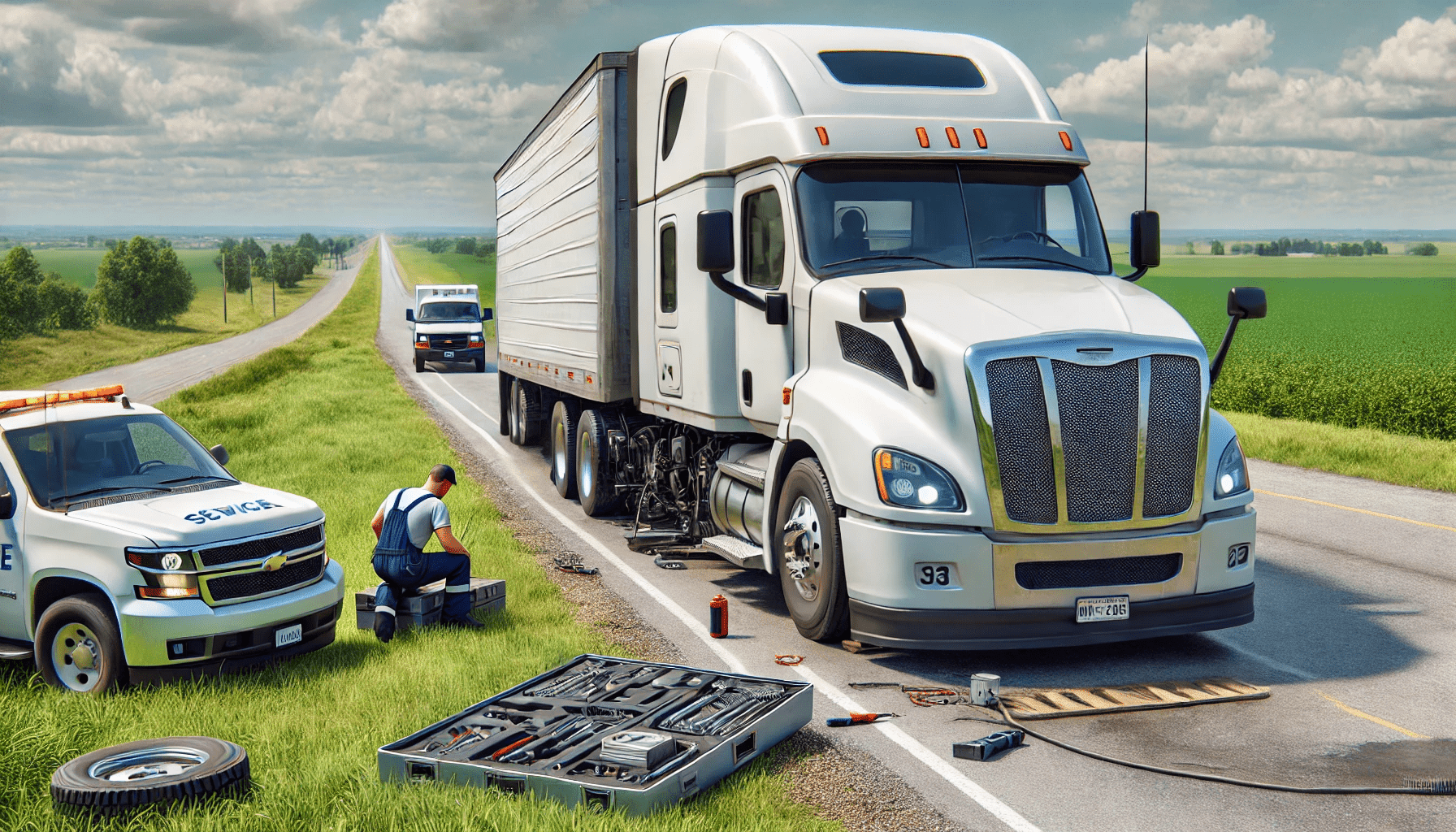
Step 6: Call for Professional Roadside Tire Service
A trained roadside technician can:
-
Replace the damaged tire safely
-
Inspect surrounding components
-
Remove wrapped debris from axles and brakes
-
Ensure the trailer is roadworthy before moving
This prevents minor damage from turning into a major mechanical failure down the road.
Step 7: Document the Incident
After the situation is resolved:
-
Log the incident
-
Note tire condition, load weight, and road conditions
-
Schedule a follow-up inspection if needed
Documentation helps identify patterns that can prevent future blowouts.
How to Reduce the Risk of Trailer Tire Blowouts
While not all blowouts are preventable, risk can be reduced by:
-
Maintaining proper tire inflation
-
Avoiding overloading
-
Inspecting tires during every pre-trip
-
Replacing worn or aged tires proactively
Most blowouts are caused by heat, underinflation, overloading, or worn tires.
When a Trailer Tire Blowout Happens on the Road
Even with proper maintenance, blowouts can still happen. When they do, fast and experienced roadside help makes all the difference. CC&C Roadside Truck & Trailer Repair provides emergency trailer tire service and roadside assistance to help drivers handle blowouts safely and efficiently—minimizing downtime and protecting both equipment and schedules. Knowing what to do step by step turns a dangerous situation into a manageable one—and keeps you, your load, and everyone on the road safer.
CC&C Roadside Truck & Trailer Repair – Keeping You Moving
423-442-3601
After Hours Emergency Line
423-404-3633