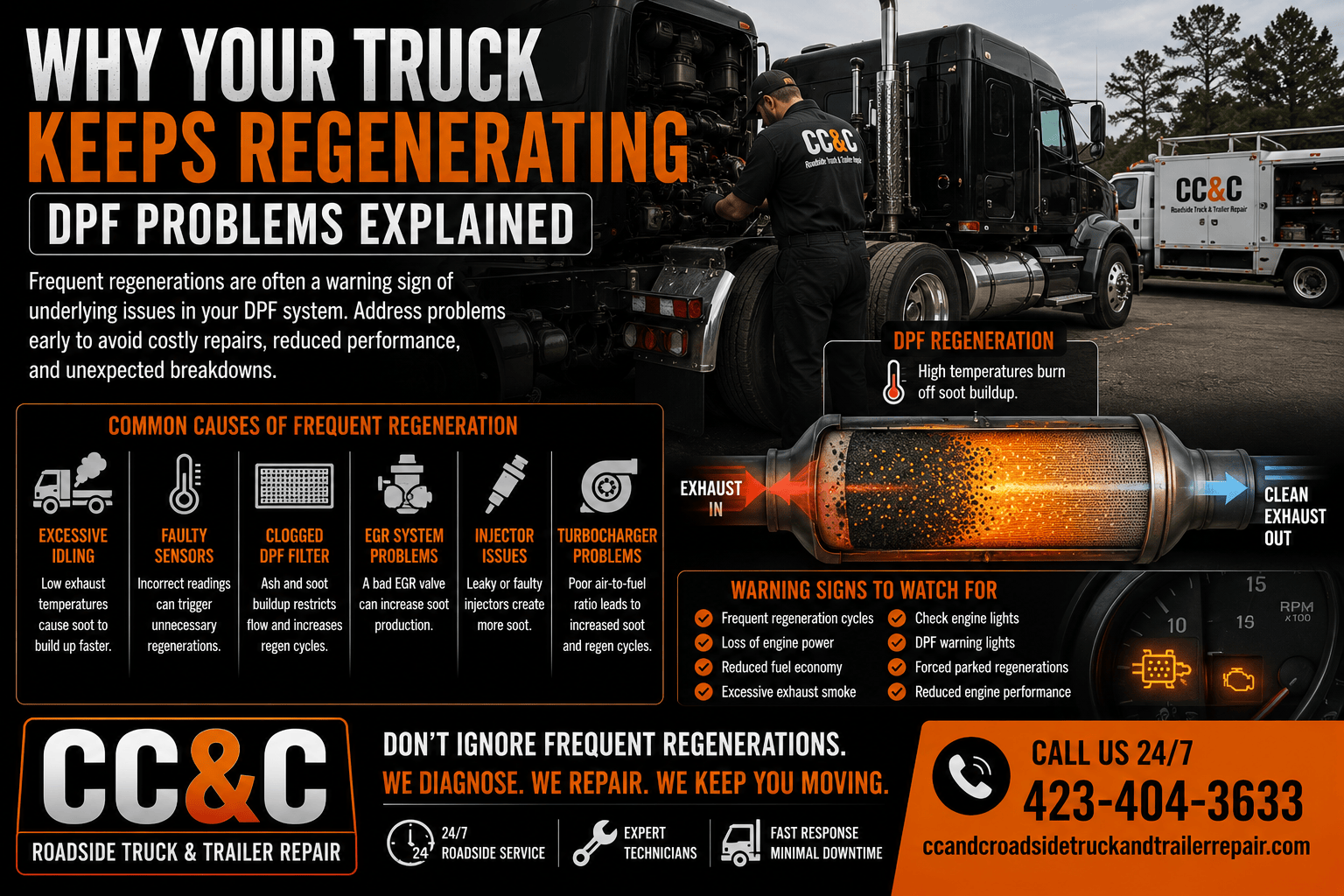
DPF Problems Explained – Why Your Semi-Truck Keeps Regenerating. If your truck seems to be regenerating more often than usual, it’s not something you should ignore. Frequent regeneration cycles are often one of the first warning signs that your Diesel Particulate Filter (DPF) system isn’t functioning properly.

DPF Problems Explained
While regeneration is a normal part of modern diesel engine operation, excessive regenerations can indicate underlying problems that may eventually lead to reduced performance, costly repairs, or even a roadside breakdown. Understanding why your truck keeps regenerating can help you address issues early and keep your vehicle running efficiently.
What Is a DPF Regeneration?
Modern diesel trucks use a Diesel Particulate Filter (DPF) to capture soot and emissions before they exit through the exhaust system. Over time, the filter fills with soot and must be cleaned through a process called regeneration.
During regeneration, the exhaust system raises temperatures high enough to burn away accumulated soot, helping the DPF continue functioning properly.
There are three common types of regeneration:
- Passive Regeneration
- Active Regeneration
- Parked Regeneration
Under normal conditions, regeneration cycles should occur periodically without causing major disruptions to vehicle operation.
Why Is My Truck Regenerating So Often?
If your truck is regenerating more frequently than normal, several issues could be contributing to the problem.
Excessive Idling
One of the most common causes of frequent DPF regeneration is excessive engine idling.
When a diesel engine spends extended periods idling:
- Exhaust temperatures remain low
- Soot accumulates faster
- The DPF fills more quickly
- Regeneration cycles increase
Drivers who spend long periods waiting at loading docks or job sites often experience this issue.
Faulty Sensors
Modern diesel engines rely on multiple sensors to monitor DPF performance.
Problems with:
- Temperature sensors
- Pressure sensors
- NOx sensors
can cause inaccurate readings and unnecessary regeneration cycles.
Clogged DPF Filter
Over time, ash and soot can build up inside the DPF beyond what normal regeneration can remove.
When this happens:
- Exhaust flow becomes restricted
- Fuel economy drops
- Engine performance decreases
- Regeneration becomes more frequent
Eventually, professional cleaning or DPF replacement may be required.
EGR System Problems
The Exhaust Gas Recirculation (EGR) system works closely with the DPF system.
A malfunctioning EGR valve can increase soot production, causing the DPF to fill faster than normal and forcing additional regenerations.
Injector Issues
Fuel injectors that are leaking or operating improperly can create excessive soot production.
This additional soot places a heavier load on the DPF system and often results in more frequent regeneration events.
Turbocharger Problems
A failing turbocharger can affect air-to-fuel ratios and combustion efficiency.
Poor combustion often leads to:
- Increased soot production
- Reduced fuel economy
- Excessive DPF loading
- More frequent regenerations
Warning Signs of DPF Problems
If your truck is experiencing DPF-related issues, you may notice:
- Frequent regeneration cycles
- Loss of engine power
- Reduced fuel economy
- Excessive exhaust smoke
- Check engine lights
- DPF warning lights
- Forced parked regenerations
- Reduced engine performance
Ignoring these symptoms can lead to expensive repairs and unexpected downtime.
How Frequent Regeneration Affects Your Truck
Many drivers assume regeneration is harmless, but excessive regenerations can create additional problems.
Potential consequences include:
Increased Fuel Consumption
Each regeneration cycle uses additional fuel. Frequent regenerations can significantly reduce overall fuel efficiency.
Reduced Engine Performance
A restricted DPF can create exhaust backpressure that affects engine power and acceleration.
Increased Maintenance Costs
Unresolved DPF issues can damage:
- Turbochargers
- Sensors
- EGR systems
- Exhaust components
Risk of Derate Mode
Many diesel trucks will eventually enter engine derate mode if DPF problems are ignored, limiting vehicle speed and power until repairs are completed.
How to Prevent DPF Problems
Fortunately, there are several ways to reduce DPF issues and keep regeneration cycles operating normally.
Minimize Excessive Idling
Reducing idle time helps maintain proper exhaust temperatures and limits soot buildup.
Follow Preventative Maintenance Schedules
Regular maintenance helps identify problems before they become major repairs.
Address Warning Lights Immediately
Ignoring DPF or check engine lights often leads to larger and more expensive problems.
Perform Highway Driving When Possible
Longer highway trips help promote passive regeneration and reduce soot accumulation.
Use Quality Fuel and Fluids
Poor fuel quality can increase soot production and place additional stress on emissions systems.
Trust CC&C Roadside Truck & Trailer Repair for Diesel Diagnostics
At CC&C Roadside Truck & Trailer Repair, we understand how frustrating DPF problems can be for truck drivers and fleet operators. Frequent regeneration cycles are often a sign that something deeper is happening within your emissions or engine systems.
Our experienced technicians can diagnose issues involving:
- DPF systems
- Turbochargers
- EGR valves
- Sensors
- Fuel systems
- Engine diagnostics
Whether you’re experiencing repeated regenerations, loss of power, or warning lights, we can help identify the root cause and get your truck back on the road quickly.
Don’t Ignore Frequent Regenerations
If your truck keeps regenerating, it’s trying to tell you something. While occasional regeneration is normal, excessive cycles often signal underlying DPF problems that can worsen over time.
Addressing these issues early can improve fuel economy, prevent costly repairs, reduce downtime, and keep your truck operating at peak performance. If you’re dealing with DPF issues or diesel engine warning lights, CC&C Roadside Truck & Trailer Repair is ready to help keep your truck moving.
CC&C Roadside Truck & Trailer Repair – Keeping You Moving
423-442-3601
After Hours Emergency Line
423-404-3633