Best Practices for Truck Drivers – How to Pull Over Safely With a Full Load on Busy Interstates. Pulling over a fully loaded rig on a busy interstate isn’t something any driver takes lightly. With cars whipping past at high speeds and tens of thousands of pounds riding behind you, even a routine slowdown can turn dangerous without the right approach. Whether it’s a sudden alert on the dash, a strange vibration, or a tire beginning to fail, knowing how to safely guide your truck onto the shoulder is essential for protecting yourself, your cargo, and everyone sharing the road.

Best Practices for Truck Drivers
At CC&C Roadside Truck & Trailer Repair, we’ve helped countless drivers manage roadside emergencies the right way—and it all starts with a safe, controlled pull-over. Here are the Best Practices for Truck Drivers.
The Critical Moment: When You Need to Pull Over
You’re driving on a busy interstate, fully loaded, and something doesn’t feel right—it could be a tire issue, engine alert, or strange noise. The rush of vehicles around you and the weight you’re hauling make pulling over anything but simple. A misjudged move can put you and everyone else at risk. At CC&C Roadside Truck & Trailer Repair in Madisonville, Tennessee , we specialize in emergency roadside assistance for truckers carrying full loads. Here’s how to pull over safely and smartly when the unexpected happens.
1. Make the Decision Early & Signal Clearly
The best pull-over is the one you don’t hesitate on. Once you feel a significant fault—blowout, loss of drive, major alert—slow down safely and prepare to exit the lane. Turn on your hazard lights immediately. Signal your intention early so faster-moving traffic is aware of your need to shift. A clear, early signal helps reduce confusion around your truck.
2. Choose the Safest Spot You Can Reach
On a loaded truck, positioning matters. Don’t aim for somewhere just off the travel lane if you can avoid it. Instead:
-
Look for a wide shoulder, rest area exit, or emergency pull-out.
-
Avoid blind curves, steep grades, or soft shoulders where your truck might sink.
-
If you’re descending a grade, try to pull off before the slope ends — you’ll have better control.
3. Slow Gradually and Use Your Momentum
With a full load, sudden braking or abrupt maneuvers can destabilize your cargo or trailer. Here’s how to handle it:
-
Gradually reduce speed by easing your foot off the throttle and gently applying service brakes.
-
Before moving onto the shoulder, check your mirrors for fast-approaching traffic.
-
Once on the shoulder, reduce gear, set the parking brake, and shift into neutral or park as per your rig’s configuration.
4. Secure the Scene Immediately
Once stopped:
-
Keep your hazard lights on.
-
Turn off the truck or place it in idle if you must keep systems running.
-
Put on a high-visibility safety vest before exiting the cab.
-
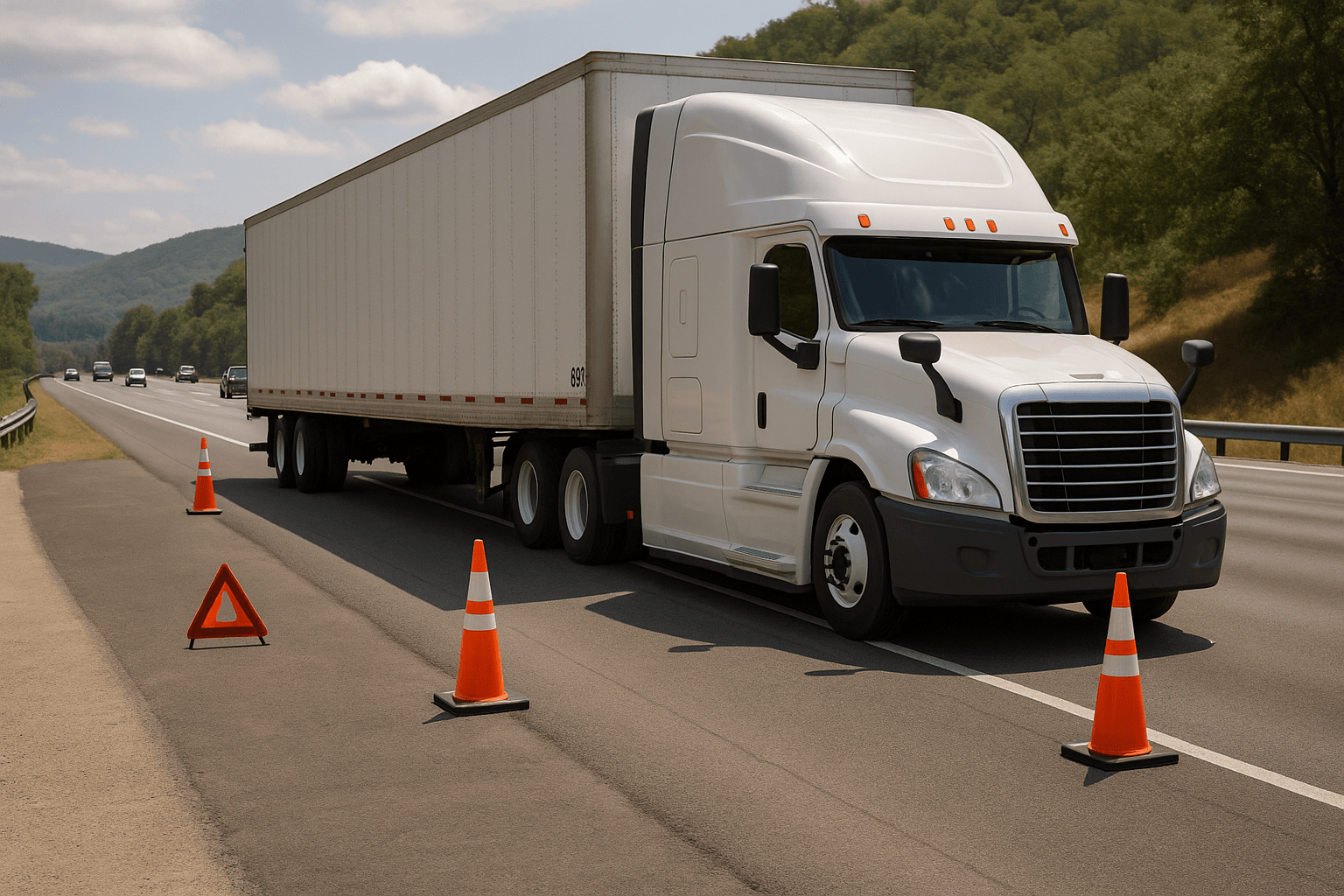
Place warning triangles or cones behind your truck: for example, one at 15–20 ft and another at 50–100 ft depending on speed of passing traffic.
-
Exit from the passenger side if possible — keep the cab between you and traffic.
5. Assess the Load & Your Truck
With a full load, every step matters:
-
Check your trailer stance to ensure it’s level and secure. If the load has shifted during your emergency maneuver, you may need to resecure or wait for help.
-
Inspect the shoulder surface: if soft or uneven, your trailer may settle or lean, creating hazard.
-
Turn off the cooling unit or auxiliary systems if they may overheat while the rig is parked.
6. Call in Professional Help If Needed
If you can’t safely fix the issue and resume without risking cargo or traffic, it’s time to call in the pros. At CC&C Roadside Truck & Trailer Repair, our team responds 24/7 to loaded breakdowns, offering mobile service so you don’t have to wait long or risk further damage.
Why These Steps Matter
-
A proper pull-over keeps you visible and less vulnerable to passing traffic.
-
Gradual deceleration with a full load prevents cargo shift or trailer instability.
-
Choosing the right spot and securing it correctly reduces your risk of further breakdown, damage, or involvement in a secondary crash.
Final Word
If you’re hauling a full load on a busy interstate and something goes wrong, the way you pull over is just as important as the fix itself. Doing it right protects your cargo, your truck, and your safety. And if you ever find yourself at the side of the road wondering what to do next—remember: CC&C Roadside Truck & Trailer Repair is just one call away, ready to get you moving again safely.
CC&C Roadside Truck & Trailer Repair – Keeping You Moving
423-442-3601
After Hours Emergency Line
423-404-3633